
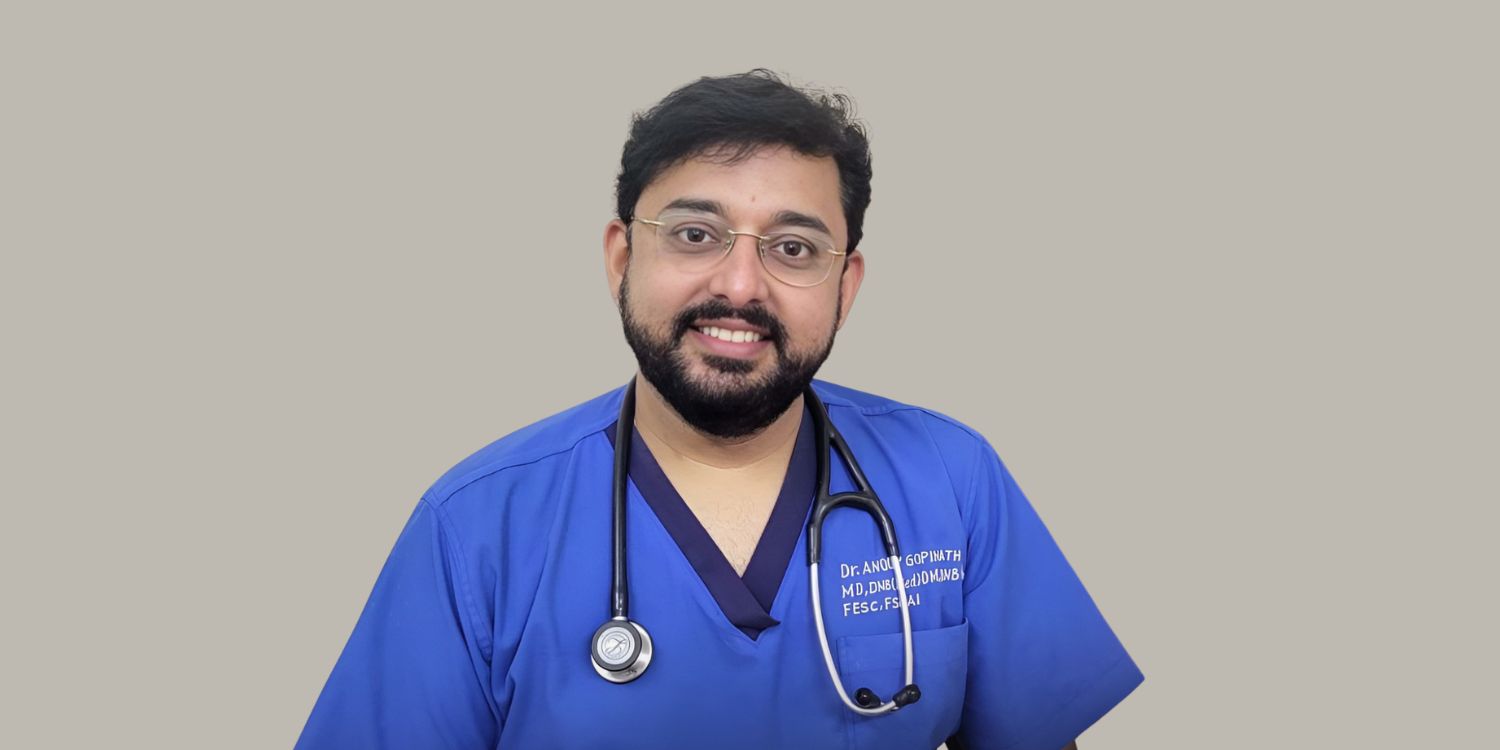
India has long carried an outsized burden of heart disease, but the shape of that burden is changing faster than most people realise. Heart attacks here are now arriving roughly a decade earlier than they do in the West, a shift doctors trace to a tangle of causes – a genetic predisposition in South Asian populations, visceral fat and rising cholesterol, a diet leaning harder on refined carbohydrates, and a surge in diabetes running alongside it. Add long working hours, tobacco and alcohol use, and the general absence of exercise from urban life, and the result is a generation reaching the cath lab younger than their parents ever did. With health emergencies now playing out in public view more than ever, in the social media age, the demand for cardiologists who are both technically skilled and genuinely trustworthy has never been higher. Interventional cardiologists like Dr. Anoop Gopinath sit at the centre of that shift, bringing three decades of hard-won expertise to a field where non-invasive and minimally invasive technique increasingly defines what good care looks like. Recognising him among the country’s most renowned cardiologists isn’t just overdue. It’s earned.
A Journey Shaped by Purpose
Dr. Anoop Gopinath’s path toward cardiology was set long before he entered medical school. As a child, his grandmother, who had lost a daughter to cardiac illness, often told him he was destined to become a cardiologist, a conviction that stayed with him through the years. From the outset of his career, he chose to focus on solving patients’ problems rather than chasing accolades, prioritising excellence and compassion above all else. He trained at RG Kar Medical College before moving to Fortis Kolkata, where he honed the confidence to perform complex interventions without hesitation. He later returned to his hometown of Palakkad, Kerala, to begin his own practice.
His grandmother did not live to see him become the cardiologist she always insisted he would be. He speaks of that absence plainly, without dwelling on it, but is certain she is watching from somewhere, and he remains grateful that her words, said so early and so often, helped shape the physician he became. It is a debt he has spent thirty years repaying, one patient at a time.
Numbers That Tell a Story
His steady growth as a practitioner is reflected in the numbers. To date, Dr. Anoop has performed over 25,000 interventional procedures. From early on, his practice embraced complex cases, including chronic total occlusions, calcified lesions, bifurcations, left main interventions, device closures, embolisations, and peripheral procedures such as lower and upper limb angioplasties, each case sharpening his technique for the next. Rotational atherectomy became a routine tool for tackling calcified lesions, and when orbital atherectomy arrived, he was among the first in Palakkad to apply it, resolving cases that had previously seemed intractable. He also began accepting patients turned away by other centres, gradually refining his approach until he could treat them successfully, a track record that brought him deep professional fulfilment as word spread and patients began arriving from neighbouring districts and states.
A Generation at Risk
Dr. Anoop Gopinath has watched the age of his patients fall in real time, and he is candid about why. Across India and much of Asia, he says, the age of first heart attack is dropping every year, and the reasons run deeper than lifestyle alone. Genetic predisposition plays a role, as does a working culture where job-related stress has intensified in recent years. He also points to something less commonly discussed – a rise in infections since the COVID-19 pandemic, which he has seen bring on heart attacks and strokes in strikingly young patients.
What makes this dangerous, he explains, is the mismatch between how slowly the underlying disease usually builds and how suddenly it can announce itself. In most people, cholesterol begins depositing in the arteries as early as their twenties, and the resulting atherosclerosis then creeps forward for decades, from a 20 percent blockage toward 50 or 60 percent by the time a patient reaches their fifties or sixties. It is only in that final stretch that symptoms are meant to appear. But an intervening infection can push a partial blockage of 30 or 40 percent to total occlusion almost overnight, producing a heart attack in a patient who, by the usual timeline, should still have decades to go. For Dr. Anoop, the clinical priority that follows is unambiguous: any young patient presenting with chest pain has to be evaluated properly and quickly, without the assumption that youth rules out serious disease.
Access Without Compromise
On the future of advanced cardiac care beyond India’s major metros, Dr. Anoop Gopinath is optimistic, pointing to his own practice as proof that geography need not limit access to quality treatment. “Being in a Tier 2 city in Kerala doesn’t make a difference. Any form of advanced treatment can be made available,” he says, adding that affordability plays an equally important role.
Operating within the cooperative healthcare sector, he notes, keeps costs low enough that all sections of society can benefit from advanced treatment. At Rajiv Gandhi Co-operative Hospital, that has meant no compromise on infrastructure or equipment, so that underprivileged and privileged patients alike receive the same standard of care, whether the procedure is a routine angioplasty or a complex left main intervention.
Life in the Fast Lane
Looking ahead, Dr. Anoop remains driven by a commitment to continuous growth, aiming to master a new procedure or case type every three months while also mentoring the next generation of cardiologists. He is equally focused on refining himself as a physician, whether that means sharpening his approach to patient care, adjusting long-held habits, or perfecting his technique in the cath lab.
The demands of the profession are significant. Interventional cardiologists routinely work long hours given the emergency nature of the field, yet he makes it a point to carve out time for family. Beyond the hospital, his interests turn toward travel and music, along with a passion for driving that occasionally takes him to the racetrack with friends.
Passing on the Torch
When it comes to advice for upcoming interventional cardiologists in India, Dr. Anoop Gopinath is candid about both the rewards and the demands of the specialty. “Cardiology is a great option, but there should be an aptitude for it. You should recognise your own skills,” he says, cautioning that the profession often comes at a personal cost. “Understand that your time may mostly not be your own. It requires more dedication and longer working hours.” Yet for those willing to make that commitment, he believes the reward is worth it. “Finally, you will be satisfied that you have helped many,” he says, a philosophy that has quietly guided his own three-decade-long journey in cardiac care.