
India performed nearly 20,000 organ transplants in 2025, yet only about 18 per cent came from deceased donors. Most kidney recipients still depend on a living relative, and many willing donors are ruled out by blood-group or immunological incompatibility. The patients who reach a transplant team are often high-risk: some are children, some are highly sensitised, and some need a kidney alongside another organ. Caring for them calls for nephrologists who can work across the full span of kidney care, from prevention and affordable dialysis to incompatible and combined-organ transplantation.
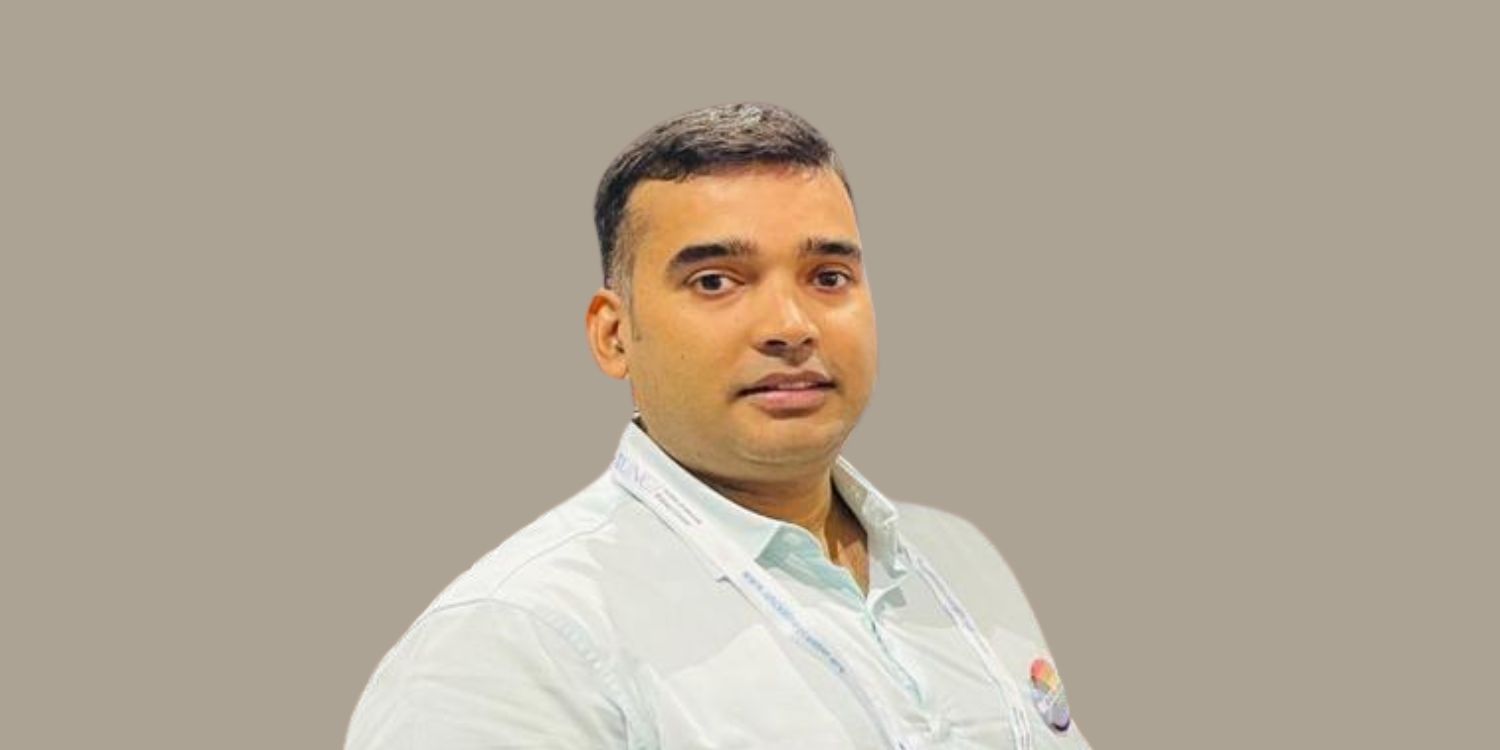
Dr. Arun Kumar N, Senior Consultant in Nephrology and Renal Transplant at Aster CMI Hospital, Bengaluru, has built his practice around precisely these difficult clinical crossroads. He led the nephrology and transplant effort for India’s first reported paediatric ABO-incompatible kidney transplantation performed within a kidney-paired donation (KPD) swap, taking primary responsibility for planning and executing the complex transplant strategy. He has developed a particular interest in cases in which conventional options have narrowed and a carefully designed alternative can offer a second chance.
Resilience From the Start
Dr. Arun Kumar N grew up in Srirampura, Bengaluru. He contracted polio at the age of two and lost his father a few years later. His mother, who worked in a canteen, raised three children on her own.
Community outreach workers enrolled him in the integrated school run by the Association of People with Disability, where he excelled. He represented the school at the Bournvita Quiz Contest, the first of many quiz titles, before moving to a mainstream school and completing his tenth standard with distinction.
A general merit seat took him to Vijayanagar Institute of Medical Sciences, Ballari, for his MBBS. Dr. Sanjay Pai, a senior orthopaedic and joint replacement surgeon now at Apollo Speciality Hospital, Jayanagar, Bengaluru, stepped in to pay five years of his fees. Dr. Arun also secured second rank in a national scholarship examination for students with disabilities, which covered his hostel expenses. He completed his MBBS in first class and earned a university blue in quizzing from Rajiv Gandhi University of Health Sciences.
As Vice President of the Karnataka State Junior Doctors’ Association, he helped lead the students’ movement in 2009 that contributed to the enactment of the Medicare Protection Act in Karnataka, strengthening legal protection for healthcare professionals against violence. For him, it was part of a larger journey he says he has enjoyed: learning to organise people, accept responsibility and pursue change when established systems could be improved.
Choosing Nephrology
Dr. Arun Kumar N secured first rank in the Karnataka PGCET for postgraduate medical admission in the physically challenged category and completed his MD in General Medicine at Mysore Medical College. After a year at an Employees’ State Insurance hospital, he pursued super-speciality training, ranking 135th nationally in the entrance examination and choosing nephrology. He completed his DNB in Nephrology at KIMS, Thiruvananthapuram, in 2017. He describes his years there as life-changing. His teachers, Dr. Satish Balan, Dr. Praveen Muralidharan and Dr. Ramdas Pisharody, gave him not only clinical training but, in his words, the purpose and courage to practise nephrology and to take responsibility for difficult patients.
Back in Bengaluru, he worked at BGS Gleneagles Global Hospital and Columbia Asia Hospital, followed by SPARSH Group of Hospitals, including its Yeshwanthpur and RR Nagar centres. He subsequently worked at Apollo Hospitals before moving to Aster CMI Hospital.
Complex Transplants, New Techniques
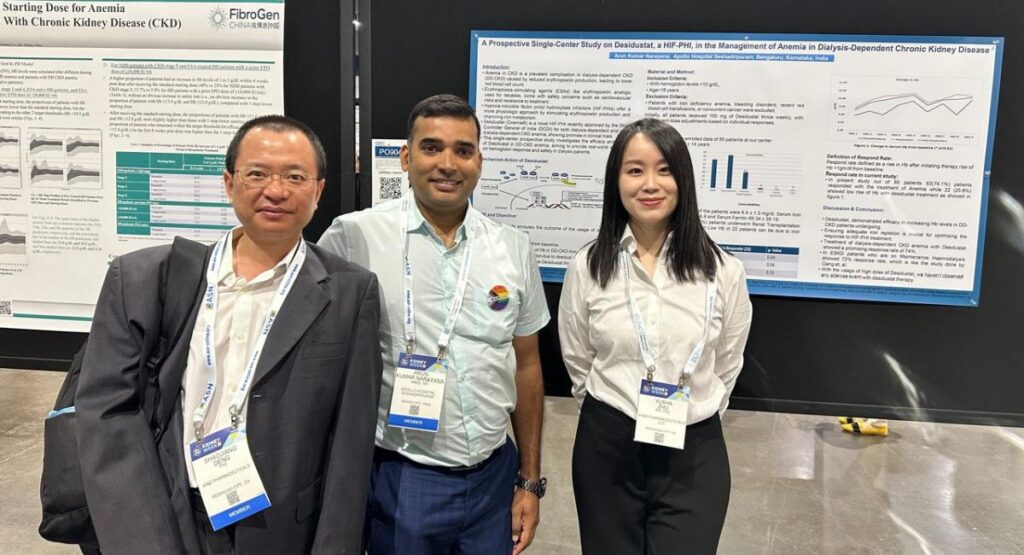
His work at Aster CMI spans living and deceased donor transplantation, high-risk transplants, glomerular disease and post-transplant immunosuppression. He has taken on transplants considered unusually complex, including ABO-incompatible transplantation and strategies designed to reduce the burden of conventional desensitisation. Alongside clinical practice, he has published numerous papers in national and international medical journals, with his academic interests extending across nephrology, dialysis and transplantation.
He has presented his work at ASN Kidney Week 2024 and was recently part of the Aster team, led by cardiologist Dr. Nagamalesh U.M., that performed a combined heart-kidney transplant.
A Swap That Opened Two Doors
His most recent milestone shows how technology, immunology and clinical judgement can be brought together. Two families came to Aster CMI with transplants that, considered separately, posed formidable barriers. In the first, a 21-year-old needed a kidney, but his mother, his willing donor, had an incompatible blood group (A to O), with a high anti-A antibody titre. In the second, a 15-year-old boy was to receive a kidney from his grandmother, but a positive CDC crossmatch and an unfavourable donor-risk profile raised concern about proceeding with the original pairing.
Using software from the Alliance for Paired Kidney Donation (APKD), Dr. Arun led the nephrology and transplant planning for a two-way exchange, working closely with transplant surgeon Dr. Avinash T.S. and the wider multidisciplinary team. The 21-year-old received a compatible O-group kidney from the other pair. The teenager received the mother’s A-group kidney. The paediatric transplant therefore remained ABO-incompatible, with an antibody titre of 1:256, but the exchange overcame the original crossmatch barrier and offered a more favourable transplant pathway.
It became the country’s first reported paediatric ABO-incompatible kidney transplant performed within a kidney-paired exchange. For Dr. Arun, the significance lay not merely in being first, but in accepting responsibility for a transplant strategy that required precise immunological assessment, desensitisation planning, surgical coordination and synchronisation between two donor-recipient pairs. It was an example of how a barrier to transplantation can sometimes become the starting point for a better solution.
A Second Chance at One
One case from his time at Apollo Hospitals stays with him. A one-year-old girl with congenital hepatic fibrosis and autosomal recessive polycystic kidney disease had been treated at CMC Vellore and Dr. Rela Institute in Chennai before her family reached him. Critically ill, she was listed for a combined liver-kidney transplant.
Within a week, organs became available from a 14-year-old boy after a road accident. His elder brother insisted the family donate. The organs were large for her, and the team had planned to share them between two recipients, but in surgery the whole liver proved an exact fit.
Before transplantation, severe fluid overload had to be addressed. She weighed about 12 kg at baseline but had reached approximately 25 kg with fluid accumulation. Dr. Arun led the use of Aquadex ultrafiltration, removing 12 to 13 litres over 19 hours, which he describes as a first in India in the setting of a combined liver-kidney transplant. The transplant followed, and she went home after 36 days.
“This case made me feel that being a doctor is worth as much as life itself,” he says.
Across these experiences runs a consistent idea: innovation in nephrology should not simply make treatment more sophisticated; it should make good treatment more reachable. Dr. Arun’s interest is in using technology, smarter transplant matching, newer dialysis strategies and better clinical pathways to improve outcomes while reducing avoidable costs. For him, innovation matters most when it converts complexity into a practical solution and brings advanced kidney care within reach of more patients.
The Future of Kidney Care
Dr. Arun sees combined transplants, including heart-kidney, liver-kidney and kidney-pancreas transplantation, as an important frontier, alongside implantable and bio-artificial kidneys and earlier prediction of kidney disease. “Our goal is to make the world free of kidney disease, and make people understand that many kidney diseases are treatable,” he says.
Prevention sits at the centre of that goal. “Not all kidney problems are permanent. Many of them can be treated and controlled.”
He is an early adopter of artificial intelligence, using it for documentation, diet planning, HLA matching and paired kidney exchange, while maintaining that it is not yet mature enough to guide treatment independently. “AI becomes the face, but the mind and the machine behind it will always be the human brain.”
He expects preventive nephrology to play a major role over the next decade. “Hard work, dedication and honesty will define the nephrologist of the future,” he says. “Always look for the road that no one has taken, and take it.”
Beyond the Clinic
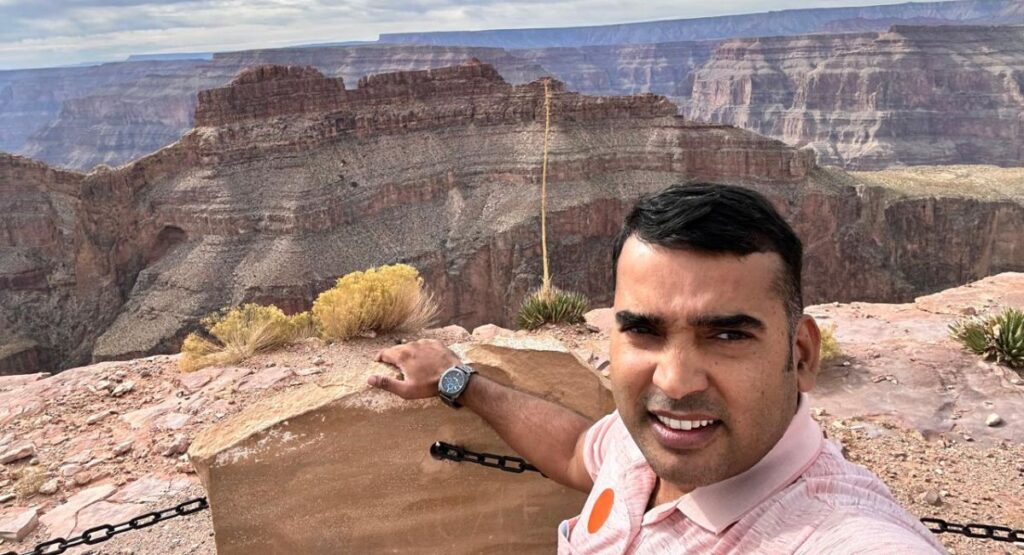
Dr. Arun Kumar N plays the flute and the veena, and sings. He runs Nikhara Kidney Care at Hoysala Circle, Kengeri, Bengaluru, with a focus on making kidney care and dialysis more accessible and affordable, particularly for patients for whom the recurring cost of chronic kidney disease can itself become a barrier to treatment. He also travels to satellite centres in Magadi and Tavarekere serving rural patients. He farms four acres organically, is developing AI tools to predict short- and long-term transplant rejection, and is pursuing an MBA in healthcare management from IIM.
Looking back, he sees the student movement of 2009, the teachers who shaped him at KIMS, the difficult transplant decisions, his research and his effort to lower the cost of kidney care as parts of the same journey. It is a journey, he says, that he has enjoyed, because each stage has reinforced the same lesson: medicine advances when knowledge is matched by courage, responsibility and the willingness to find a better way.
“Work itself is the balance now,” he says. Sundays are kept for family.