
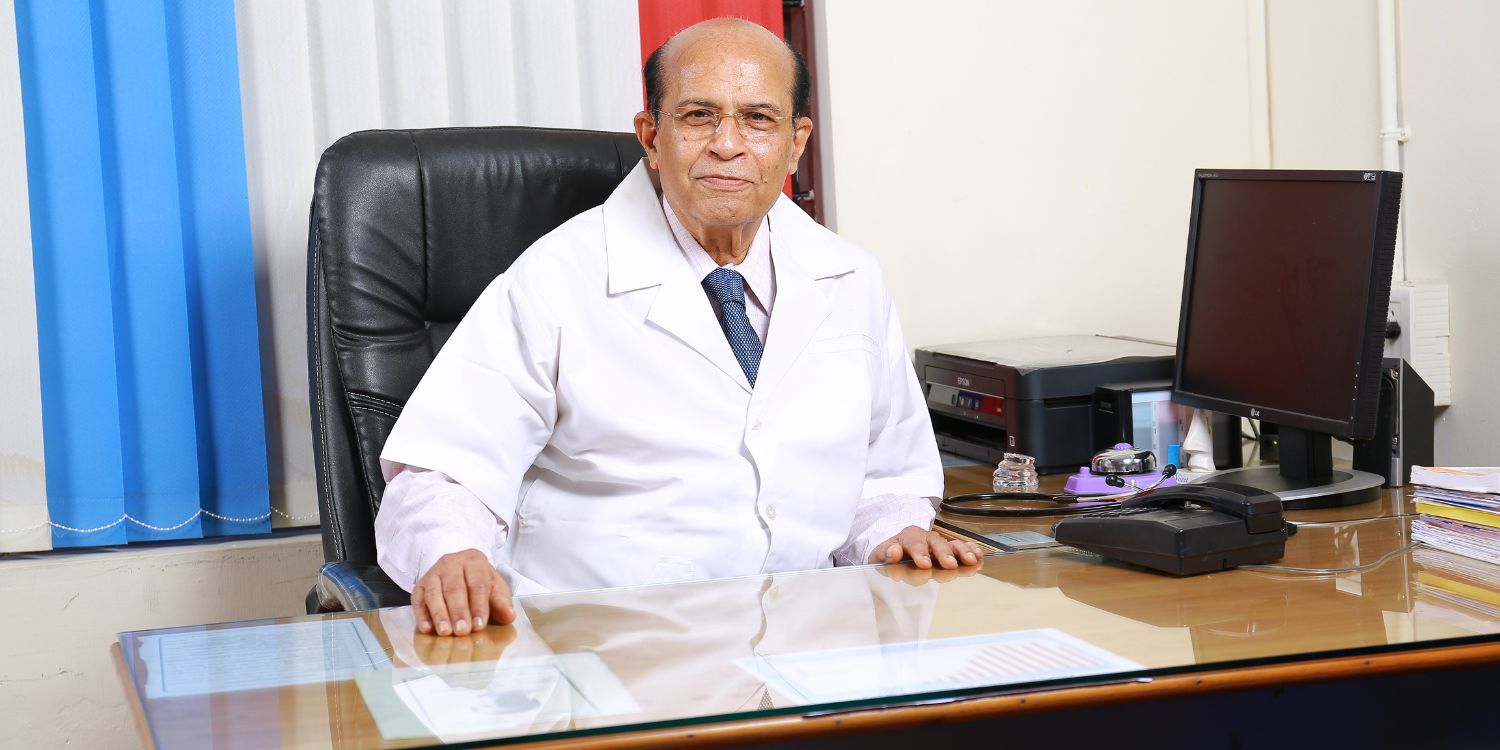
Nearly six decades in medicine. More than four and a half decades at the same institution, and over 53,000 patients treated for chronic venous and lymphatic disorders. A clinical innovation developed from bedside experience. Research extending from venous disease to genetics, microcirculation, nanoscience, biomaterials and regenerative medicine. And, in 2026, the conferment of a Doctor of Science (D.Sc.) – honoris causa – in Vascular Science by Mahatma Gandhi University, Kerala.
The professional journey of Prof. Dr. N. Radhakrishnan is distinguished not merely by longevity, but by an enduring willingness to question conventional thinking and pursue scientific explanations for what he observed in his patients.
At 80, he continues his clinical, academic and research work as Senior Consultant Vascular Surgeon and Medical Administrator at St. Thomas Hospital, while leading research initiatives and collaborating with younger scientists.
A Career That Began Unexpectedly
Medicine itself was not Prof. Dr. Radhakrishnan’s original ambition. As a young man, he wanted to become an engineer. Even after entering medicine and completing surgical training, venous disease was not initially a field he intended to pursue.
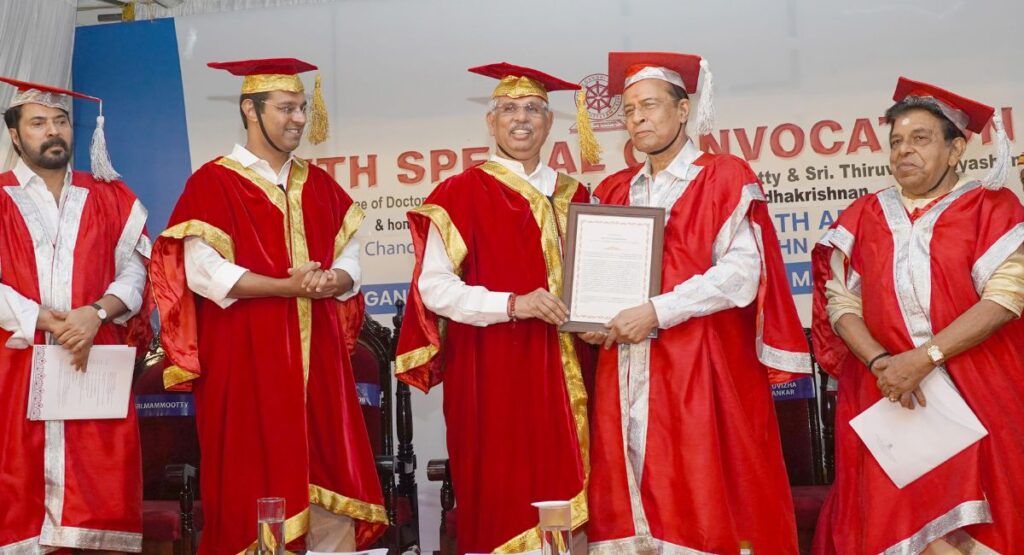
Arlekar, Governor of Kerala, at the 9th Special Convocation of Mahatma Gandhi University, Kerala, on 25 May 2026
Then came a patient who changed the direction of his life.
A priest associated with his hospital was suffering from a severe, non-healing leg ulcer. Prof. Dr. Radhakrishnan initially referred him elsewhere. After treatment by several specialists failed to produce healing, the patient returned and asked what he should do next. Unable to turn away a suffering patient, Prof. Dr. Radhakrishnan decided to attempt a technique he had been developing.
That experience became a turning point. The technique evolved into Modified Microfoam Sclerotherapy (MMFST), which he subsequently used in the treatment of more than 53,000 patients with chronic venous and lymphatic disorders. More importantly, the experience prompted the question that would influence much of his later career:
Why did this treatment work when previous approaches had failed?
The search for an answer progressively moved his interest from conventional surgery towards the deeper mechanisms of chronic venous disease—its microcirculation, vascular biology, genetics and cellular pathology.
Four and a Half Decades at St. Thomas Hospital
Prof. Dr. Radhakrishnan joined St. Thomas Hospital, Chethipuzha, as a Consultant in General Surgery on 7 April 1980. He has remained associated with the institution ever since.
As his interest in venous disease deepened, he recognised the need for a research platform that could connect clinical observations with scientific investigation. This led to the establishment of the St. Thomas Institute of Research on Venous Diseases (STIRVD) in 2008, of which he continues to serve as Medical Director. In 2012, he was also appointed Medical Administrator of St. Thomas Hospital.
His guiding philosophy has remained consistent:
Bedside observations should generate scientific questions, and research should ultimately return its answers to the bedside.
That principle has helped transform his clinical experience into a broader programme of translational vascular research.
From Venous Disease to Genetics
Prof. Dr. Radhakrishnan’s desire to understand why venous disease develops led him beyond its visible manifestations.
Through the Dr. N. Radhakrishnan Foundation for Research on Venous Diseases, which he personally supported through contributions from his professional income, he facilitated a long-term research collaboration with the Rajiv Gandhi Centre for Biotechnology, Thiruvananthapuram, under the guidance of eminent cardiovascular surgeon-scientist Prof. Dr. M. S. Valiathan.
The collaboration expanded his work into the genetic basis of venous disease and reinforced an idea that became increasingly central to his thinking: vascular disease cannot always be understood solely by examining large, visible vessels. The genetic, endothelial, cellular and microcirculatory environment must also be explored.
His scientific contributions consequently span chronic venous disease, lymphatic disorders, genetic studies and translational research.
Entering Nanoscience and Regenerative Medicine
Another major turning point came through his academic association with renowned nanoscience scholar Prof. Dr. Sabu Thomas.
The collaboration introduced a new interdisciplinary direction—bringing vascular medicine together with nanoscience, biomaterials and regenerative science.
The objective was broader than developing another procedure. It was to explore whether advances in material science, molecular research and regenerative biology could contribute to vascular repair, tissue healing and future therapeutic innovation.
ima
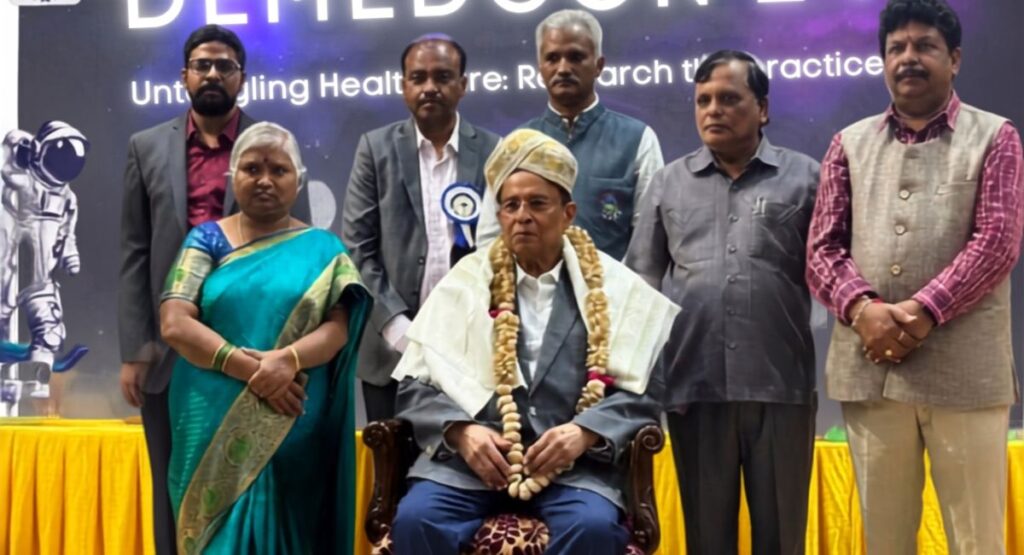
Sri Devaraj Urs Medical College, Kolar, Karnataka, on 27 September
2024, where he delivered an invited lecture on ‘Innovations in the
Management of Chronic Venous Disease (CVD)’
This vision culminated in the establishment of the Dr. N. Radhakrishnan International Centre for Medical Innovation (NRICMI) at Mahatma Gandhi University, Kerala, in 2023.
Prof. Dr. Radhakrishnan serves as its Founder and Chairman and also as Honorary Visiting Professor in Nanoscience & Technology at Mahatma Gandhi University.
NRICMI reflects his belief that the medicine of tomorrow will increasingly emerge from collaboration—between clinicians, geneticists, molecular scientists, nanotechnologists, material scientists and young researchers.
Scholarship Beyond the Operating Theatre
Prof. Dr. Radhakrishnan’s contribution to vascular medicine extends well beyond clinical practice.
His academic qualifications include MS (General Surgery), D.Sc. (h.c.) – Vascular Science, MRCP (London), FAIS, FIAMS, FICS (Phlebolymphology), FRCS (Glasgow), FRCS (London), FACS (USA & Canada), FRSM (London).
He has published original research in international peer-reviewed journals across areas ranging from venous genetics to microvascular disease.
He is also the author of two major reference works:
A Treatise on Venous Diseases, published by Jaypee Brothers Medical Publishers in 2014, and
Genesis, Pathophysiology and Management of Venous and Lymphatic Disorders, published by Elsevier in 2022.
His continuing academic interests include chronic venous and lymphatic disorders, microvascular pathology, endothelial biology, biomaterials, regenerative medicine and cardiovascular research.
In 2026, Mahatma Gandhi University recognised this body of work by conferring upon him the Doctor of Science (D.Sc.) – honoris causa – in Vascular Science.
International Academic Engagement
Prof. Dr. Radhakrishnan remains actively connected with the wider cardiovascular research community.
He serves as an International Faculty Member of the International Academy of Cardiovascular Sciences and the International Society of Cardiovascular Research.
He also serves as Chairman of the Ethical Committee of the National Homeopathy Research Institute in Mental Health, Ministry of AYUSH, Government of India, reflecting his involvement in research ethics and academic governance.
Technology Must Remain Human
Having practised medicine through more than five decades of extraordinary technological change, Prof. Dr. Radhakrishnan has witnessed the transformation from an era of limited imaging and laboratory support to today’s world of molecular genetics, nanotechnology and artificial intelligence.
He welcomes technological progress, but with one essential condition:
It must improve the care of the patient.
His view of artificial intelligence is therefore measured and practical.
“AI should assist the doctor; it should not replace the doctor.”
Technology can process data, identify patterns and support clinical decision-making. But it cannot fully replace the physician’s personal understanding of a patient’s suffering, fears, expectations and individual circumstances.
For him, medicine must remain a combination of science, judgement and compassion.
His Message to Young Doctors
When speaking to younger doctors, Prof. Dr. Radhakrishnan emphasises five qualities above everything else:
Dedication. Commitment. Passion. Compassion. Continuous learning.
Technical competence, he believes, is indispensable—but not sufficient.
“A patient is not a case number, a scan or a disease.”
A doctor must first understand the human being who is suffering.
He encourages young physicians to remain intellectually curious, continuously update themselves in both clinical and non-clinical sciences, and explore emerging fields such as genetics, molecular medicine, nanoscience and artificial intelligence.
Above all, they must keep asking why.
Why did the disease develop?
Why did one treatment succeed?
Why did another fail?
Could there be a better approach?
That same habit of questioning transformed his own career from conventional surgery into a continuing scientific journey.
Service Beyond Medicine
For Prof. Dr. Radhakrishnan, service does not end at the doors of the hospital.
He is a Major Donor of Rotary International and has been associated with philanthropic initiatives supporting medical care, research, scholarships and social upliftment. His Foundation has also supported research and educational initiatives.
He views social service and medical service as expressions of the same responsibility.
“I do not consider social service something separate from medicine. The purpose is ultimately the same—to help another human being.”
Family – The Strength Behind the Journey
Despite decades spent balancing clinical work, administration, research and academic commitments, Prof. Dr. Radhakrishnan regards the support of his family as one of the foundations of his professional life.
His philosophy of balancing responsibilities is expressed in a maxim he has long valued:
“The busiest person always finds a little time to accommodate a situation; but the laziest person will never find any time for anything.”
For him, time is ultimately shaped by commitment and purpose.
At 80, the Journey Continues
At 80, after nearly six decades in medicine, more than 53,000 patients with chronic venous and lymphatic disorders, books, research publications, international qualifications and academic recognition, many would consider such a distinguished professional journey complete.
For Prof. Dr. N. Radhakrishnan, however, the journey is far from over.
His priority remains straightforward: to help heal patients, remain available to those who are suffering, work with younger researchers and pass on the knowledge accumulated through a lifetime in medicine.
His legacy therefore lies not merely in the number of procedures performed or honours received. It lies in a continuing intellectual progression:
from the bedside to observation;
from observation to questioning;
from questioning to research;
from research to innovation;
and from innovation back to the patient.
The young man who once wanted to become an engineer eventually became a surgeon.
The surgeon who initially had little interest in venous disease eventually devoted decades to understanding it.
And a single patient with a non-healing ulcer opened a scientific journey that would ultimately encompass venous disease, genetics, microcirculation, nanoscience and regenerative medicine.
For Prof. Dr. N. Radhakrishnan, vascular surgery became more than a speciality. It became a lifelong scientific mission.
Nearly six decades in medicine. More than four and a half decades at the same institution. Tens of thousands of patients treated for chronic venous and lymphatic disorders. A clinical innovation developed from bedside experience. Research extending from venous disease to genetics, microcirculation, nanoscience, biomaterials and regenerative medicine. And, in 2026, the conferment of a Doctor of Science (D.Sc.) – honoris causa – in Vascular Science by Mahatma Gandhi University, Kerala.
The professional journey of Prof. Dr. N. Radhakrishnan is distinguished not merely by longevity, but by an enduring willingness to question conventional thinking and pursue scientific explanations for what he observed in his patients.
At 80, he continues his clinical, academic and research work as Senior Consultant Vascular Surgeon and Medical Administrator at St. Thomas Hospital, while leading research initiatives and collaborating with younger scientists