
For many Indian couples, the toughest part of fertility treatment is paying for it. A 2026 study of couples at tertiary centres across India found that a single IVF cycle cost an average of ₹1.1 lakh out of pocket in public hospitals and ₹2.3 lakh in private ones. Only 5% had insurance that covered the treatment, and 58% relied on outside financial support.
Distance adds a second hurdle. India now has more than 2,500 registered ART clinics, yet advanced fertility care has long been concentrated in the large metros, leaving couples in smaller towns to travel for every scan and procedure.
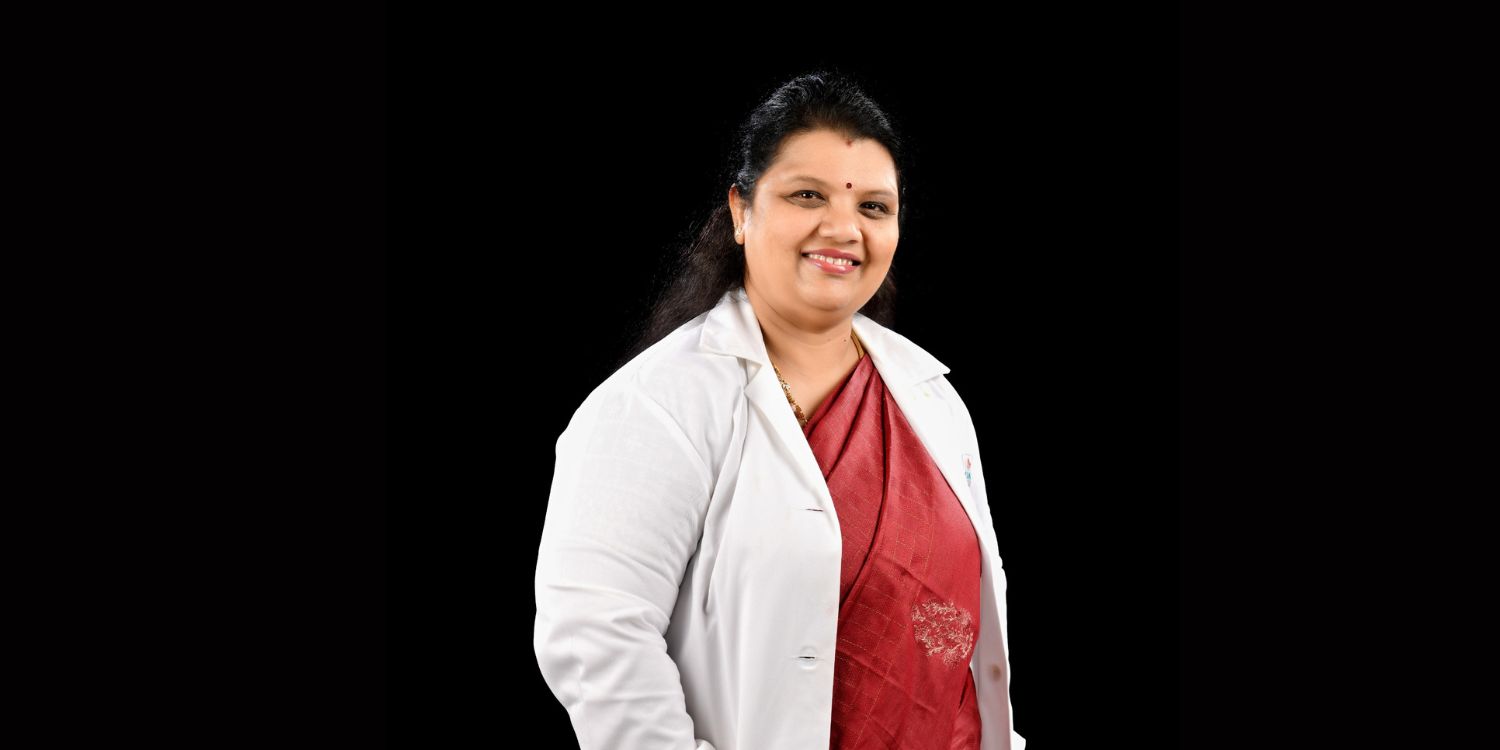
Dr. Rekha Rajesh of Vijay Srishti Fertility Centre, Hosur, has spent over a decade addressing both, building a network of fertility centres in tier-2 and tier-3 towns designed to keep treatment within reach.
Rooted in Bengaluru
Dr. Rekha Rajesh was born and raised in Bengaluru, where her father worked in Karnataka’s tourism sector and her mother with the Travel Corporation of India. Her mother always hoped she would become a doctor, a goal Dr. Rekha soon made her own.
There was a personal inspiration too. The obstetrician who delivered her was also a pioneer in the field of fertility, and she was her role model. “She was one of my idols,” Dr. Rekha says. “I wanted to do something like her, and that’s how I’m where I am today.”
She completed her MBBS at Adichunchanagiri Institute of Medical Sciences and her postgraduate training in obstetrics and gynaecology at Sri Siddhartha Medical College, Tumakuru. She then worked at St. John’s Medical College Hospital, Bengaluru.
Building a Practice in Hosur
In 2001, she married and moved to Hosur, where her husband, a physician, was already in practice. She established herself as a gynaecologist there, while her focus turned steadily towards fertility care.
Keen to specialise, she completed a fellowship and master’s training in reproductive medicine in Germany, followed by postgraduate training at Warwick & Masters in London in the UK. In 2012, she launched the IVF centre at Vijay Hospital, which has grown into Vijay Srishti Fertility Centre.
Eight Centres, One Team
Vijay Srishti now runs centres in Hosur, Krishnagiri, Tirupattur and Bengaluru, where its newest branch at Dommasandra serves the city’s outskirts. Dr. Rekha also partners with the Matrutva fertility chain at Tirupati, Nellore, Nandyal and Proddatur in Andhra Pradesh. Together, the eight centres have around 20 doctors, and she has helped more than 25,000 couples become parents.
She is President of the Obstetrics and Gynaecology Society of Krishnagiri. She is also a member of the Indian Society for Assisted Reproduction, the American Society for Reproductive Medicine and the Indian Menopause Society, PCOS Society of India.
She holds clinics at the other centres every week and travels to Tirupati each month for complex cases. She interviews every doctor who joins, and a board of doctors reviews difficult cases together. Regular clinical meetings and annual two- to three-day sessions keep the whole team updated in ultrasound & reproductive immunology, hormonal management, laparoscopy and hysteroscopy.
“Every patient is a project,” she says. “We have to individualise the treatment and tailor it to their needs.”
The centres share an EMR and use automated alarm and reporting systems in their laboratories, and AI in the IVF laboratory is her next priority.
Affordable by Design
Her model rests on a simple idea. Equipment and technology cost the same everywhere, but rent and staffing are lower outside the big cities. “When our investment is lower, we can charge patients less,” she explains. “We want to be in tier-2 and tier-3 cities so that we can reach many more people.”
Central purchasing of medicines, culture media and consumables across eight centres lowers costs further. “Our profit margins are kept on the lower side so that we can deliver quality care at affordable prices,” she says.
Every month, the centre’s own funding programme supports one or two couples who cannot afford treatment, and former patients often sponsor for Selected Patients.
Eighteen Years of Hope
One couple came to her after 18 years of marriage and multiple complications. Rather than rush into treatment, Dr. Rekha worked stepwise, first preparing the uterus, then the ovaries, before attempting conception. The patient conceived and went home with her baby.
Every couple begins with two to three months of preconception care, and many stay with her for up to two years. “Till they carry home the baby, we travel with them,” she says. “When they go back with the child, nothing else can give us that happiness. That is the dopamine in our profession.”
The Road Ahead
India does not lack obstetricians and gynaecologists, she believes, but they are concentrated in the cities. She welcomes growing insurance coverage and government ART services in medical colleges. For her own network, the focus is on strengthening the eight centres with new technology before expanding further.
She hopes more young doctors will choose obstetrics despite the night duties. “It is the only department where people come for happiness, not sickness,” she says. “To deliver a child and help a couple conceive is a very divine job.”
Beyond the Clinic
Dr. Rekha Rajesh credits her family for her balance. Her husband handles administration and team management, while her mother and mother-in-law support the household. A keen dancer in her younger years, she now makes time to travel with her family once every three months.
Her advice to young doctors is clear. “Don’t live to earn. Earn to live,” she says. Build on ethical practice, knowledge and skill for the first five years, she adds, and professional and financial satisfaction will follow.