
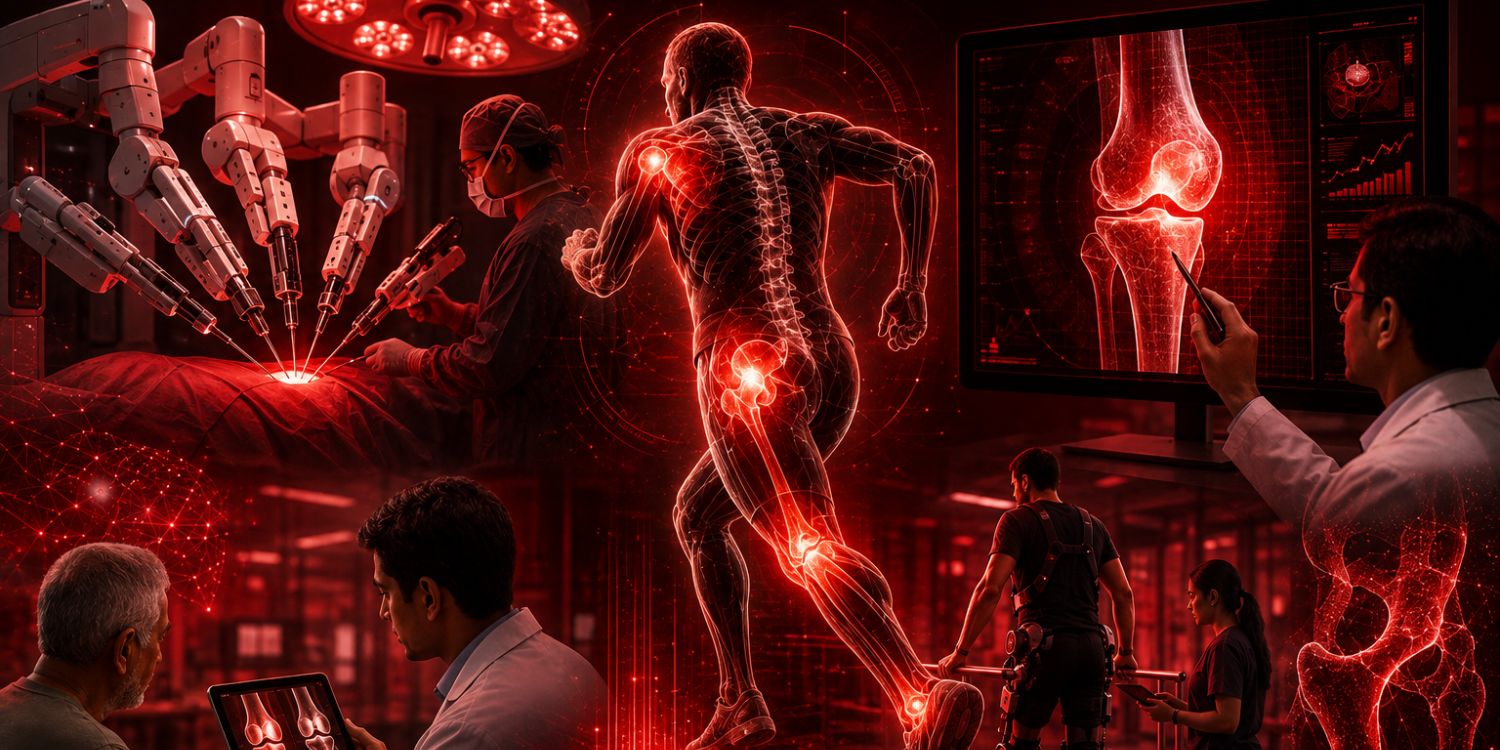
For most patients, artificial intelligence still sounds like something out of a science fiction film. But in operating theatres across India’s leading hospitals, AI has already become a quiet, essential collaborator, not replacing surgeons, but sharpening their precision before a single incision is made, and staying with the patient long after they’ve left the hospital.
Before the surgery
Pre-operative planning has traditionally relied on a surgeon’s experience and standard imaging to map out an approach. AI is changing that equation. By analysing a patient’s CT and MRI scans, machine learning algorithms can now generate detailed 3D models of bone structure, helping surgeons anticipate the exact size, angle, and positioning of implants before they ever enter the theatre. For complex joint replacements, this means fewer surprises mid-surgery, better implant fit, and reduced risk of misalignment, one of the leading causes of revision surgery down the line.
This technology also allows for more personalized surgical planning. Rather than working from generalized anatomical assumptions, surgeons can account for a specific patient’s bone density, deformity, or prior injury history, tailoring the procedure to the individual rather than the average case.
After the surgery
The bigger shift may be happening after the patient leaves the hospital. AI-powered recovery tracking, through wearables and smartphone apps, is giving surgeons visibility into a patient’s rehabilitation that simply didn’t exist before. Range-of-motion, gait patterns, and activity levels can now be monitored remotely, flagging early signs of stiffness, poor healing, or complications long before a patient’s next scheduled follow-up.
For a country where many patients travel long distances for specialist care, this remote monitoring is particularly valuable. A patient recovering in a smaller town no longer needs to make an expensive trip back to a metro hospital just to confirm their recovery is on track — the data can often answer that question first.
The road ahead
AI in orthopaedics isn’t about replacing clinical judgment; it’s about giving surgeons better information, earlier. As adoption grows across India’s hospitals, the technology promises fewer complications, faster recoveries, and a more personalized standard of care, one where decisions are increasingly guided by data as much as by decades of surgical experience.
The scalpel isn’t going anywhere. But increasingly, it’s guided by a screen.