
India is quietly battling a surge in musculoskeletal disorders. Joint pain, spinal degeneration, and declining bone density are no longer conditions reserved for old age. The main driving factors are sedentary lifestyles, nutritional gaps, and screen-heavy routines, which are now eroding bone and joint health across every age group, children included. What was once considered a slow, natural consequence of ageing is now showing up decades earlier, driven by how we sit, move, eat, and live.
This shift demands more than awareness coupled with clinicians who combine deep technical skill with a willingness to innovate for the realities of Indian patients. It calls for a special breed of orthopaedicians who don’t just treat the fracture in front of them, but question why the standard of care hasn’t kept pace with the people it’s meant to serve.
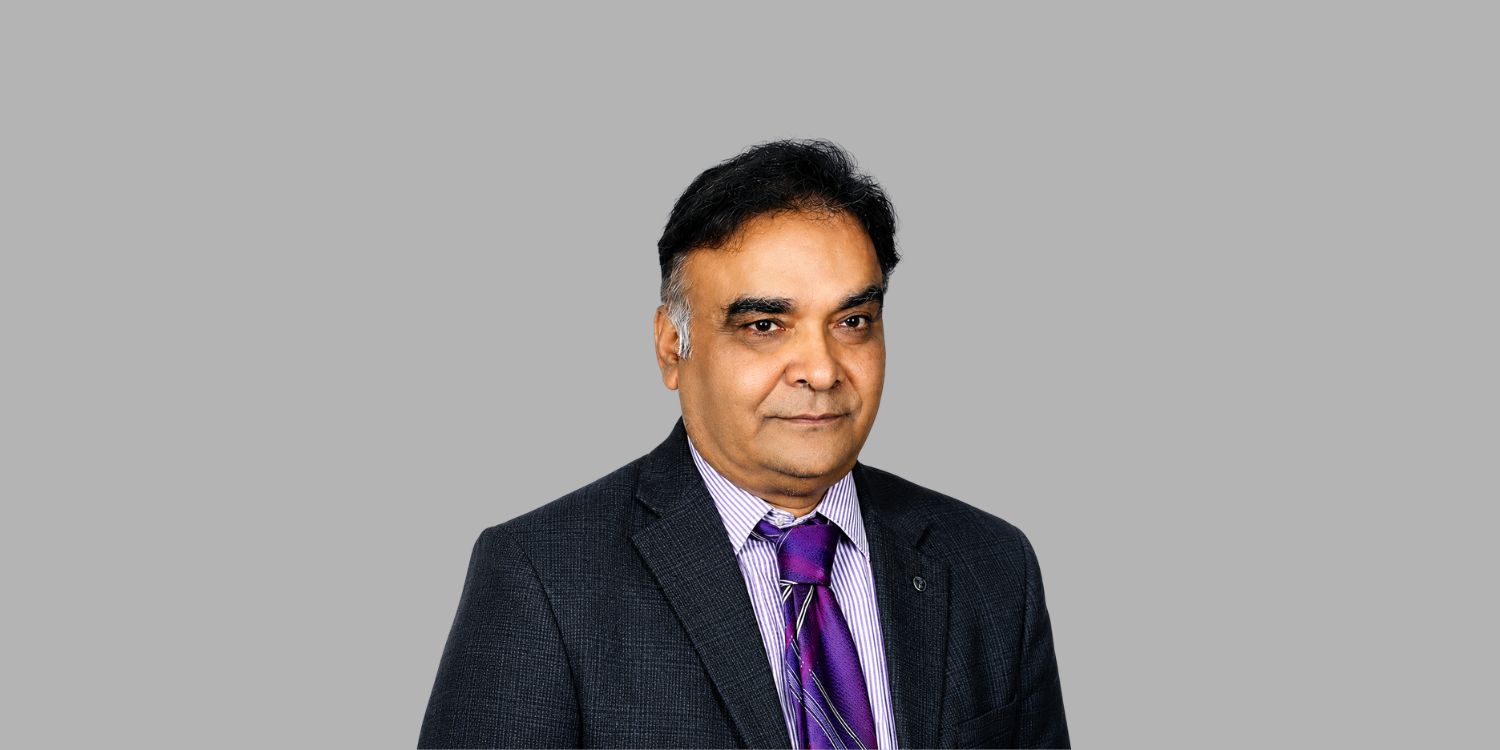
Prof. Anil Kumar Rai is one such name. Across nearly four decades, from a district hospital in Ghazipur, to operating theatres in Liverpool and Dublin, and back to Banaras Hindu University, he has built a career less around convenience and more around consequence. Known for taking on spinal and reconstructive cases head-on that other surgeons had turned away, and quietly returning, even post-retirement, to set up orthopaedic care in places that had none, it is precisely this kind of purpose-driven orthopaedics that the moment calls for.
The Long Road Home
Prof. A K Rai completed his graduation and post-graduation from Banaras Hindu University in 1983, followed by a brief six-month stint in private practice. Even then, a deeper pull toward Europe was already forming, and before long, a chance to train abroad presented itself, one that would eventually lead him back to India. His father, an English professor, had built a respected academic name of his own, but Prof. Rai was determined not to lean on that legacy and wanted to be entirely self-made. This spirit took him to Libya, where he worked for nearly ten months, until his father’s passing called him back home.
On his return, he joined the district hospital in Deoria for a short period before moving to Ghazipur, where he practised for roughly a year and a half. A homecoming to Banaras followed, along with a growing ambition to join BHU itself, though the district hospital setup offered little room for research or publication, a gap he still managed to bridge by getting one or two papers out during that time.
What came next was, in his own telling, a convergence of blessings, family support, and sheer persistence, resulting in an admission into the MCh programme in orthopaedic surgery in England. The savings he had built up in Libya, quietly growing in a UK account, gave him the financial footing he needed. It was a rare opportunity, as that year, only two candidates from all of India were selected, Prof. Rai being among them.
He completed his MCh at the University of Liverpool in 1993, having relocated to the UK in 1992. A string of locum assignments followed before he secured a registrar’s position at St. James’s Hospital in Dublin, a trauma-focused institution, where he spent a year. From there, he moved to Limerick, working at a regional hospital centred on elective, cold surgery.
Eventually, the pull toward BHU, the institution where his academic journey had begun, proved stronger than settling abroad. He returned to India in November 1996, interviewed for the Assistant Professor’s post that January, and was selected shortly after.
Reinventing the Hip
Soon after joining Banaras Hindu University, Prof. Rai observed that the department was still relying on an old Austin-Moore type of prosthesis. When he asked the Head of Department why a bipolar prosthesis wasn’t in use instead, he was told that such devices tend to wear out within seven years. That answer didn’t sit well with him, so he turned to the literature to understand where the shortcoming actually lay, since a bipolar prosthesis was otherwise an excellent option for surgeons, even at district-level hospitals, for treating fracture neck-of-femur cases in elderly patients.
He began working out of the IIT-BHU workshop, first building a wooden model and then a more refined version, testing it on cadavers in the forensic department to arrive at the correct offset. Once the design was finalised, he filed for a patent, which was granted in 2008 under his name for what was termed a “bicentric” device. The then Vice Chancellor, Dr. Panjab Singh, had wanted the prosthesis named after him personally, but Prof. Rai insisted otherwise, holding that since the work had been carried out at the institute, the credit should belong to the institution. That is how it came to be known as the BHU Hip Device.
In the years since, it has been used in close to 5,000 patients. Its defining advantage over a conventional bipolar prosthesis lies in allowing patients to sit cross-legged and squat, a functional need rooted in India’s socio-cultural and economic realities, while also being significantly more affordable. Manufacturing was taken up by a company in Ahmedabad, and six papers on the device were published during his time at BHU. He later documented the entire process in a book titled Innovative Design of a Bipolar Prosthesis – The BHU Hip Device.
Once the innovation found its way into newspaper coverage, larger players like Johnson & Johnson took notice and explored the possibility of manufacturing it themselves, though at a price point Prof. Rai felt was excessive. Looking back, Prof. Rai admits he probably shouldn’t have parted with the device on those terms, having received no formal credit or acknowledgment from that engagement. Even so, the Ahmedabad manufacturer continues to produce it to this day, and Prof. Rai, along with a handful of other doctors, continues to use it in practice.
Not Done Yet
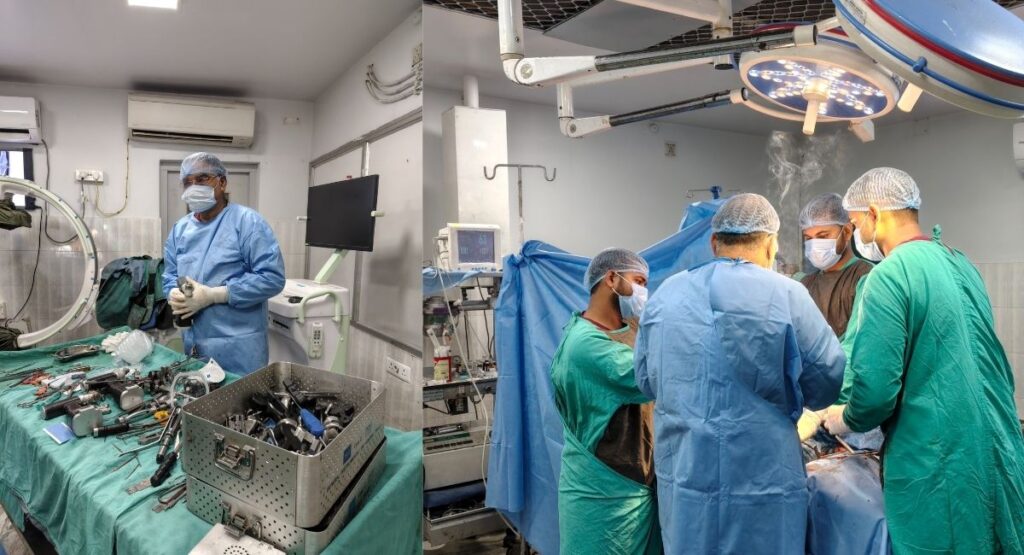
Formal retirement did little to slow Prof. Rai down. Driven by a continued interest in academics and research, he took on an assignment roughly 130 kilometres from Banaras, at a district hospital which is now called the PGI Medical College, in the Chandauli/Azamgarh belt. At the government’s request, he helped set up orthopaedic surgical services there from the ground up, a considerable challenge given how limited the existing facilities were. Over nearly two years, he trained junior lecturers on-site, though the daily commute eventually proved unsustainable. He chose to settle back in Banaras, where he now practises at the hospital run by the Swami Param Welfare Society.
He also holds the position of Professor Emeritus at Heritage Institute of Medical Sciences, visiting twice a week to teach and mentor students, and occasionally stepping in for complex surgical cases.
Beyond the Operating Theatre
Away from the wards and workshops, Prof. Rai describes himself, in his own words, as “essentially a man of philosophy and literature.” That inclination shows up in how he spends his time outside medicine, whether it’s visiting a monastery in Jharkhand or indulging in his long-standing interests in swimming, travelling, writing, and speaking.
A career built across continents has come at a personal cost, one he acknowledges candidly. “My family has certainly missed my presence over the years,” he reflects. Even after returning to India and settling into BHU, frequent travel to Delhi, where his wife is based, has remained constant. His wife, meanwhile, is a Delhi-based gynaecologist specialising in IVF, herself trained at Liverpool Women’s Hospital, a quiet echo of the couple’s shared UK years.
It’s fitting, then, that his parting advice to the next generation draws from that very journey, one that took him abroad and firmly back home again. “There’s no great need to look at going abroad,” he offers. “Almost everything one needs to learn is available here in India, and we are doing excellent work in this country as well.” The one exception he makes is telling – “Where going abroad genuinely helps is in observing the doctor-patient relationship, and how patients are treated as human beings, the compassion, courtesy, and humanitarian attitude one can learn from those healthcare systems. That aspect is worth learning from abroad, the rest can largely be learned at home.”
This perfectly sums up a career that has always looked outward only to bring something back. Four decades on, Prof. Anil Kumar Rai remains, above all, a physician who came home to build, and never really stopped.