
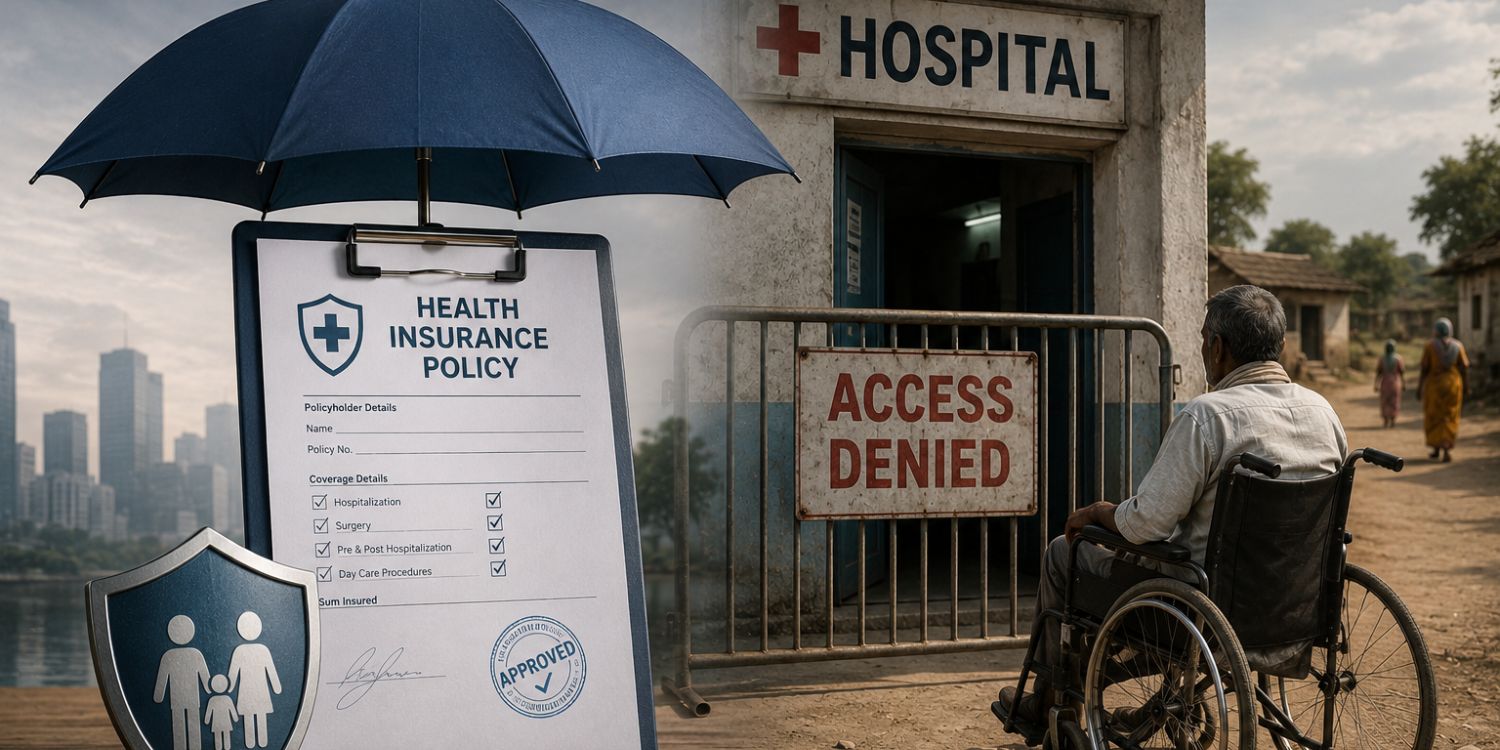
Ask any Indian family that has tried to buy health insurance for an aging parent, and you will hear some version of the same story. The premium was shockingly high, the pre-existing conditions were barely covered, or the policy simply refused to insure someone past a certain age. For a country racing to build a formal elder care industry, this is a quiet but serious gap.
The Premium Problem
Insurers price risk, and age is the clearest risk signal there is. As a result, senior citizen health plans in India routinely come with steep premiums, often the highest in the market for any age group. Financial advisors typically recommend a sum insured of at least fifteen to twenty five lakh rupees for seniors, given how quickly medical inflation eats into smaller coverage amounts. For families already managing a fixed or shrinking income in retirement, that kind of premium is often simply unaffordable.
Pre-Existing Conditions, the Real Barrier
The bigger issue is not just cost but access. Most seniors buying insurance for the first time already live with some pre-existing condition, diabetes, hypertension, or arthritis being among the most common. Nearly every senior citizen policy in India covers these conditions only after a waiting period, sometimes stretching to two, three, or even four years. Several plans also impose co-payment clauses of ten to twenty five percent specifically for pre-existing diseases, meaning even a covered claim leaves a family paying a meaningful share out of pocket.
For a senior managing a chronic condition today, a coverage window that opens three years from now offers little real protection.
The Exclusion List Nobody Reads Until It Matters
Standard exclusions add another layer of difficulty. Most senior policies do not cover non-allopathic treatment, routine dental or vision care, or several age-related conditions that families only discover are excluded at claim time. Waiting periods for specific treatments, cataract surgery and joint-related procedures among them, are common precisely because these are conditions seniors are statistically more likely to need.
The result is a product that looks comprehensive on a brochure but often narrows sharply the moment an actual claim is filed.
Why This Matters for Elder Care
None of this exists in isolation from the broader elder care conversation. A family that cannot get affordable insurance for a parent is also a family less likely to be able to afford professional home care, assisted living, or specialized treatment when it is needed. Insurance is not a side issue to elder care. It is the financial infrastructure that determines whether good care is even possible.
As India’s elder care sector grows, insurers, regulators, and providers will need to work more closely together. A senior living community or a home care provider is only as useful as a family’s ability to actually pay for it, and today, for too many Indian seniors, health insurance is still failing at exactly the moment it is needed most.