
Cancer remains one of the leading causes of morbidity and mortality in India. Despite recent medical and technological advances, the country’s cancer burden continues to rise, compounded by sharp regional disparities in incidence and in access to essential medical resources. This growing burden underscores the urgent need for effective,
evidence-based cancer therapies to improve patient outcomes, and medical oncology sits at the heart of that response.
But therapies are only as effective as the clinicians who deploy them, and India’s cancer burden has long outpaced its clinical workforce. This is precisely where oncologists of
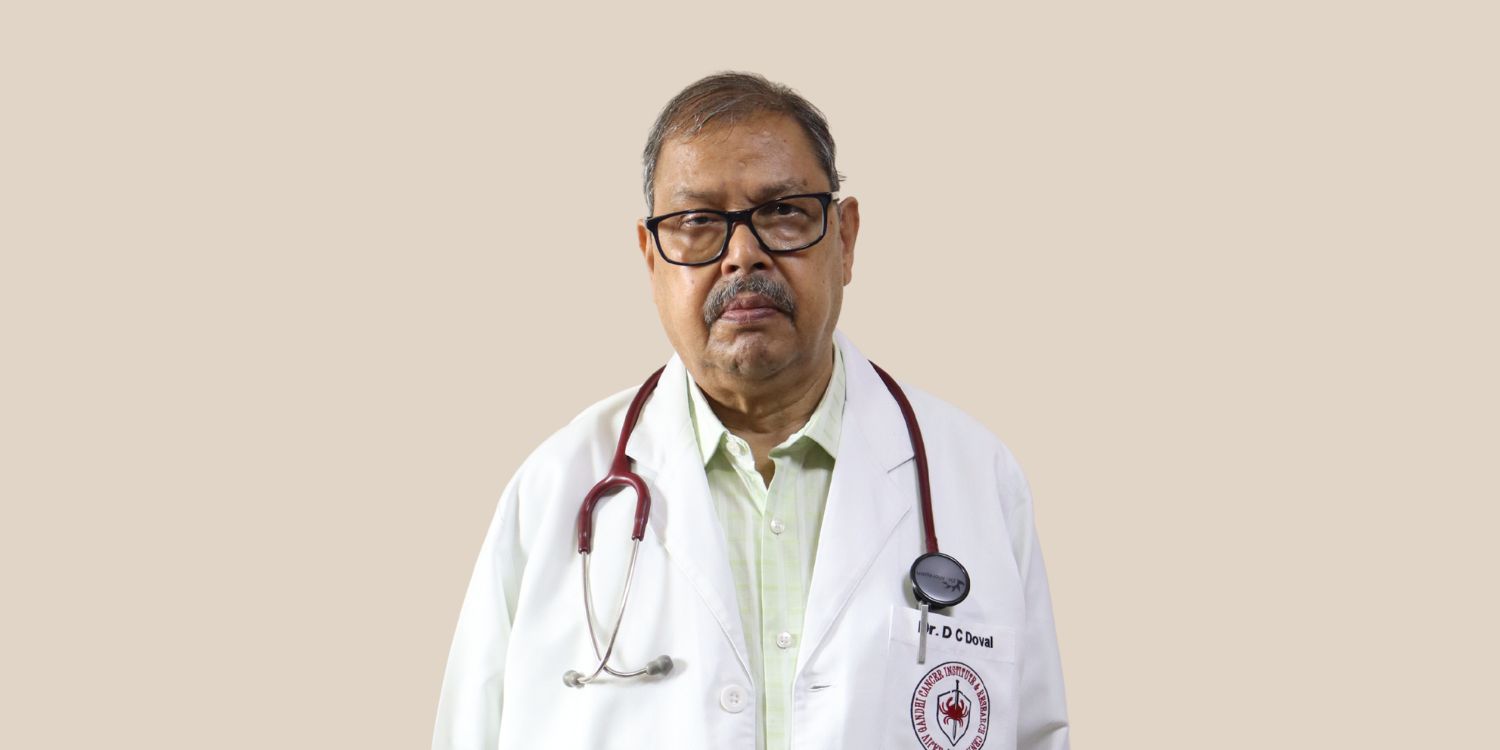
genuine depth and experience make the difference. Dr. Dinesh Chandra Doval, Chair, Medical Oncology and Chief of Breast Services at Rajiv Gandhi Cancer Institute & Research Centre (RGCIRC), Delhi, brings more than 37 years to the field. Across his career, he has focused not just on treating disease but on helping patients manage symptoms and preserve quality of life, going as far as developing new models of
oncology care delivery designed to bring medical excellence into settings that are genuinely convenient for patients and their families.
It is this combination of sustained medical excellence over nearly four decades, a research footprint spanning more than 90 clinical trials, and a patient centred philosophy of care that places Dr. Doval among the country’s most distinguished oncologists.
The Making of an Oncologist
Dr. Doval’s grounding in oncology took shape across some of India’s most storied medical institutions. He completed his M.B.B.S. at K.G.’s Medical College, followed by an M.D. from the same college in 1979.
Between 1981 and 1982, he trained in Medical Oncology at Tata Memorial Hospital, Bombay. His time there proved formative in more ways than one. “During my training days at Tata Memorial, we regularly encountered numerous highly treatable malignancies with exceptionally high cure rates,” he recalls, pointing in particular to childhood acute lymphoblastic leukemia, Hodgkin’s disease, Wilms tumor and Rhabdomyosarcoma. At the same time, the department was administering complex chemotherapy regimens for solid tumors, and the visible regression these produced left a lasting impression on the wider clinical team.
As Dr. Doval puts it, that early exposure taught him “how essential, accessible, specialized tertiary care is for driving favorable patient outcomes.” He went on to pursue a postgraduate course in Clinical Cancer Chemotherapy organized by UICC in Madras in December 1983, before completing a Certificate Course in Genetic Engineering at the Indian Institute of Science (IISc),Bangalore, in 1988, a rare pivot for a clinician of that era, and one that would shape his approach to the discipline for decades.
The IISc chapter arrived at a moment when chemotherapy was still evolving rapidly, and the notion of pairing chemical treatment with tumor biology felt, in his own words, “distinctively futuristic.” That immersion, he says, offered “a real-world insight into the intricate molecular landscapes, cellular mutations, and signaling pathways that govern malignancy,” equipping him with tools that few oncologists of his generation possessed at the time.
Moving Beyond One Size Fits All
For much of the twentieth century, cancer treatment operated on a fairly broad assumption that patients with the same type of cancer received largely the same treatment, regardless of how their individual tumor behaved. Dr. Doval has watched that assumption unravel over the course of his career. “Historically, patients with the same organ-specific cancer received identical, broad-spectrum treatments, often resulting in variable efficacy and severe toxicities,” he explains. Today, that picture looks very different.
Modern genetic testing now allows doctors to study the specific biology of a patient’s tumor before deciding on treatment, an approach known as precision oncology. Rather than starting with a standard protocol and adjusting only if it fails, doctors can often identify what is actually driving the cancer’s growth and choose a therapy suited to that particular tumor from the outset. According to Dr. Doval, the benefits go beyond outcomes alone. Testing for these markers upfront helps avoid the older method of trial and error, sparing patients from treatments unlikely to work for them and reducing both unnecessary side effects and financial strain, a meaningful consideration for families managing treatment costs in India. “Using biomarkers to select among these diverse modalities ensures that available financial resources are directed toward therapies with the highest probability of success,” he notes.
That said, he is careful to point out this approach is not universal. For patients whose tumors do not carry any of these identifiable markers, conventional chemotherapy or immunotherapy remains the standard and often still effective path forward. What has changed is the sequence – doctors now test first and treat second, rather than the other way around.
Pioneering Trials, Protecting Patients
Long before precision oncology became routine practice, Dr. Doval was already pushing the boundaries of what Indian cancer care could attempt. He led the country’s first Phase 1 oncology clinical trial, the earliest and most cautious stage of testing a new treatment, typically reserved for patients who have exhausted other options. “Back then, it was very challenging to take up a Phase I oncology clinical trial,” he reflects, “the Hospital Management was very supportive, and we took refractory or resistant cases for treatment.” At a time when few institutions in India were willing to take on such uncertainty, this work laid early groundwork for the country’s clinical trial ecosystem.
That same commitment to rigor carried into his later involvement with biosimilars, more affordable versions of complex biological drugs that are chemically harder to replicate than standard generic medicines.
Taken together, his early trial work and his continued involvement in biosimilar research reflect a consistent thread running through his career – expanding what is possible in cancer care while making sure it remains something patients can actually access.
What Comes Next in Cancer Care
Looking ahead, Dr. Doval believes the next major shift in oncology will not come from a single breakthrough, but from three developments converging at once. The first is reducing the harm caused by treatment itself. The second is affordability at scale, expanding the availability of biosimilars so that cutting edge care does not remain confined to those who can pay out of pocket. And the third is artificial intelligence, which he believes could reshape cancer care from the ground up, from predicting how a patient might respond to treatment, to easing the administrative weight that slows hospitals down.
None of these ideas exist in isolation for him. In conclusion, he shares, “Merging toxicity reduction, financial accessibility, and AI integration will democratize precision medicine, while we collectively work towards ensuring high quality oncological care becomes a universal reality for all patients.”