
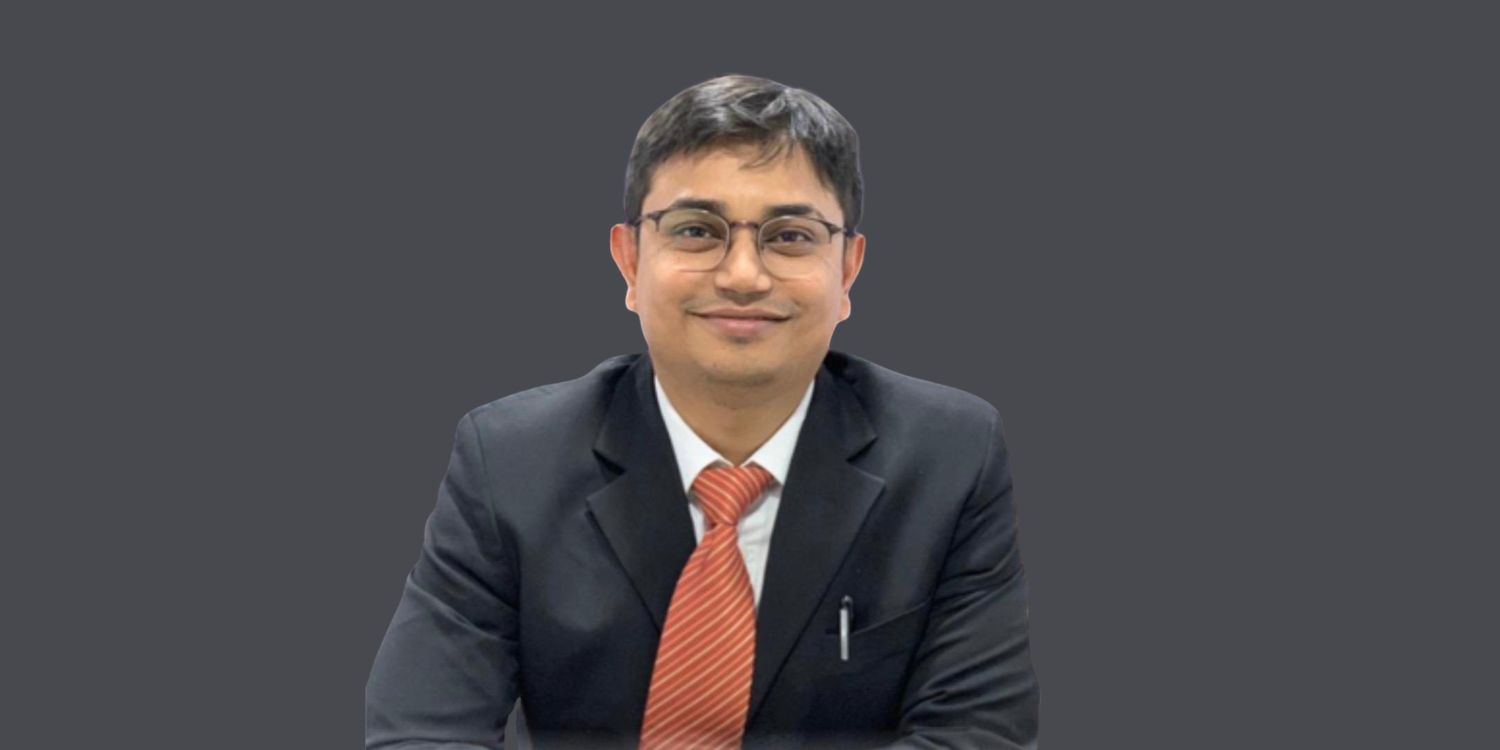
There’s a particular kind of confidence that comes from training with the very best in the world and then choosing to build your life’s work somewhere far outside the metro-city spotlight. Dr. Nishant Kumar has that confidence in abundance. Trained under a personality who single-handedly pioneered spine surgery in India back in 1983, and later shaped by fellowships in Singapore, the UK, Germany, and South Korea, Dr. Nishant could easily have built a comfortable, high-visibility practice in Mumbai and stayed there. Instead, he went to Ranchi and built the first exclusive spine centre in the entire state of Jharkhand. That decision, to plant a rare, highly specialised skill set in a place that had never had access to it before, is precisely why Dr. Nishant earns his place among Top Orthopaedic Doctors & Surgeons of 2026.
A Field Still Finding Its Feet
When Dr. Nishant entered orthopaedics, spine wasn’t yet the well-defined specialty it is today. General orthopaedic training of the time leaned heavily towards fractures, hip replacements, and sports injuries, while spine care was largely the domain of neurosurgeons. It was during his residency that he first encountered a structured spine training program, conducted by Dr. Shekhar Bhojraj, India’s senior-most and most respected spine surgeon, who took on just one trainee each year.
Two things pulled him towards spine, he says – the sheer scarcity of proper spine exposure within standard orthopaedic residency, given how demanding and meticulous the field is, and the experience of learning directly from Dr. Bhojraj himself.
Skipping the Well-Worn Path
Most young orthopaedic surgeons of that era followed a familiar route: a few years in a government hospital to build experience before specialising. Dr. Nishant’s thesis guide told him to skip that step entirely and go straight into a super-specialty, at a time when India barely had any super-specialty programs in orthopaedics to begin with. Dr. Bhojraj was one of the very few people offering one, and he advised Dr. Nishant to choose this path.
He spent two and a half years training in Bombay through a structured fellowship. But rather than stopping there, he went looking for a wider view of the field, reasoning that training under just one mentor risked tying him to a single school of thought. What followed was a genuinely global education, including a sponsored fellowship at the National University of Singapore under Professor HK Wong, another pioneer of the specialty, focused on minimally invasive techniques and spinal deformity surgery; two months within the UK’s NHS system at Cardiff University; a month in Germany learning keyhole and endoscopic surgery; and four to five months across university hospitals in South Korea.
Building Jharkhand’s First Exclusive Spine Centre
Dr. Nishant Kumar has also stayed closely involved with the Spine Foundation, the charitable and social wing founded by Dr. Bhojraj, which has now run for more than 25 years. After heading its Bombay program for three to four years, he now leads its eastern India wing, overseeing roughly 45 to 50 adopted centres, government hospitals, civil hospitals, and NGOs, where teams travel to treat underprivileged populations who would otherwise have no access to quality spine care.
It was this same instinct that led him to set up The Spine Clinic and Rehab Centre in Ranchi, the first clinic in the state dedicated exclusively to spine conditions. He draws a simple comparison, where in a metro city, you’d seek out a specialist restaurant that does one cuisine exceptionally well rather than a multi-cuisine place that spreads itself thin. His Ranchi clinic works on the same principle, seven years in, treating nothing but spine cases. It wasn’t an easy start. Spine surgery carried real social stigma, partly because historically it wasn’t always performed by surgeons specifically trained in the field. Over time, though, results built trust, and that trust is what the clinic now stands on.
This year, marking the anniversary of The Spine Clinic and Rehab Centre, Dr. Nishant Kumar launched a dedicated scoliosis screening and deformity correction programme, a new speciality wing of the clinic and one of the first of its kind in the state of Jharkhand. The focus here is on spinal deformity, a crooked, curved spine, a condition seen predominantly in young children, especially girls, where it can quietly shape not just their physical health but their confidence and upbringing as they grow. These are among the most complex surgeries in the field, demanding a level of precision and infrastructure few centres in the region are equipped to offer. Over the past year, the clinic has already performed a number of scoliosis and spinal deformity corrections, a track record Dr. Nishant sees as just the beginning of what this new speciality can do for the state.
Rewriting What Recovery Looks Like
Dr. Nishant is candid that only around 5% of spine patients actually need surgery, the vast majority are managed without it. But for those who do need it, he describes the outcome as almost uniquely rewarding in medicine witnessing patients who arrive in pain often leaving pain-free within hours or a day, a far faster turnaround than the months of rehab many other conditions require.
He’s equally direct about dismantling the fear that surrounds a spine diagnosis. Most patients arriving at his clinic are already on their second or third opinion, anxious and bracing for the word “surgery.” Rather than rushing that conversation, he walks patients through information gradually, reassures them he’ll be present at every stage of their treatment, and works alongside a dedicated counselling and rehab team, since, in his view, rehab matters just as much as the surgery itself. Surgery fixes one specific point of failure; rehab rebuilds everything around it that’s been quietly compromised over years, so the problem doesn’t resurface.
A Measured View on Robotics
Ask Dr. Nishant about robotic surgery, a subject that tends to generate as much anxiety as excitement among patients, and he’s refreshingly unsentimental. Robotics, he says, is the future, but a narrow one for now, only relevant to perhaps 5 to 10% of spine cases, and still in an early, evolving stage as a technology. Crucially, a robot doesn’t perform surgery, it guides the surgeon performing it, and a tool is only ever as good as the hands operating it.
The Road Ahead
Dr. Nishant Kumar’s ambitions for the coming years are less about personal growth and more about multiplying access. He wants to build his Ranchi centre into one of the premier spine-care institutions for Jharkhand and its neighbouring states, while expanding his network of satellite clinics. He already covers roughly 400 to 500 kilometres a week reaching four adopted centres in the periphery, logging close to 2500-3000 kilometres a month, plus weekend trips across India for the Spine Foundation’s charity work. Over the next two years, he plans to adopt two more centres in far more interior, tribal, and underprivileged regions, some barely reachable by phone. His longer-term goal is to adopt an entire village and coordinate a full team of specialists, orthopaedic, medical, and urological, to look after its healthcare needs comprehensively.
Outside the Operating Room
For someone in one of medicine’s most physically and mentally demanding specialties, Dr. Nishant’s outlet is movement. He’s a longtime photography and wildlife enthusiast, drawn to nature, waterfalls, and hiking trails back home. A stint abroad reshaped his relationship with fitness entirely, watching 60 and 75 year olds running fit and unhindered in Singapore pushed him to take up running seriously himself. He’s since completed six to seven marathons and 23 mountain hikes, alongside a demanding travel and surgery schedule.
He’s equally clear-eyed about the toll the profession can take, and about family being the counterweight to it. Coming home to a comfortable, welcoming environment after a mentally exhausting day, he says, isn’t optional, it’s what makes the rest of the work sustainable. He builds in short breaks every few months specifically to step back, de-stress, and return able to give the job everything it demands.
A Simple Message on Prevention
For a public that now spends 10 to 12 hours a day hunched over screens, Dr. Nishant’s advice is unglamorous but grounded, most spine problems, some 80 to 90% of them, trace back to posture, weight, inactivity, and years of accumulated neglect rather than any single dramatic injury. His prescription is equally simple. Maintain a healthy lifestyle, set up your workspace properly, take frequent breaks, stretch through the day, and treat your spine with the same seriousness you’d give any other long-term health risk, because unlike most conditions, a compromised spine doesn’t let you simply take a pill and carry on with your day.