
Cancer, in India, has stopped being just a medical diagnosis. It has become a mirror held up to the way we eat, the way we live, the air we breathe, and the years we wait before we ask for help. It touches families not as an isolated crisis, but as a slow, expensive unraveling, one that tests not just the body of the patient, but the finances, the faith, and the resolve of everyone around them.
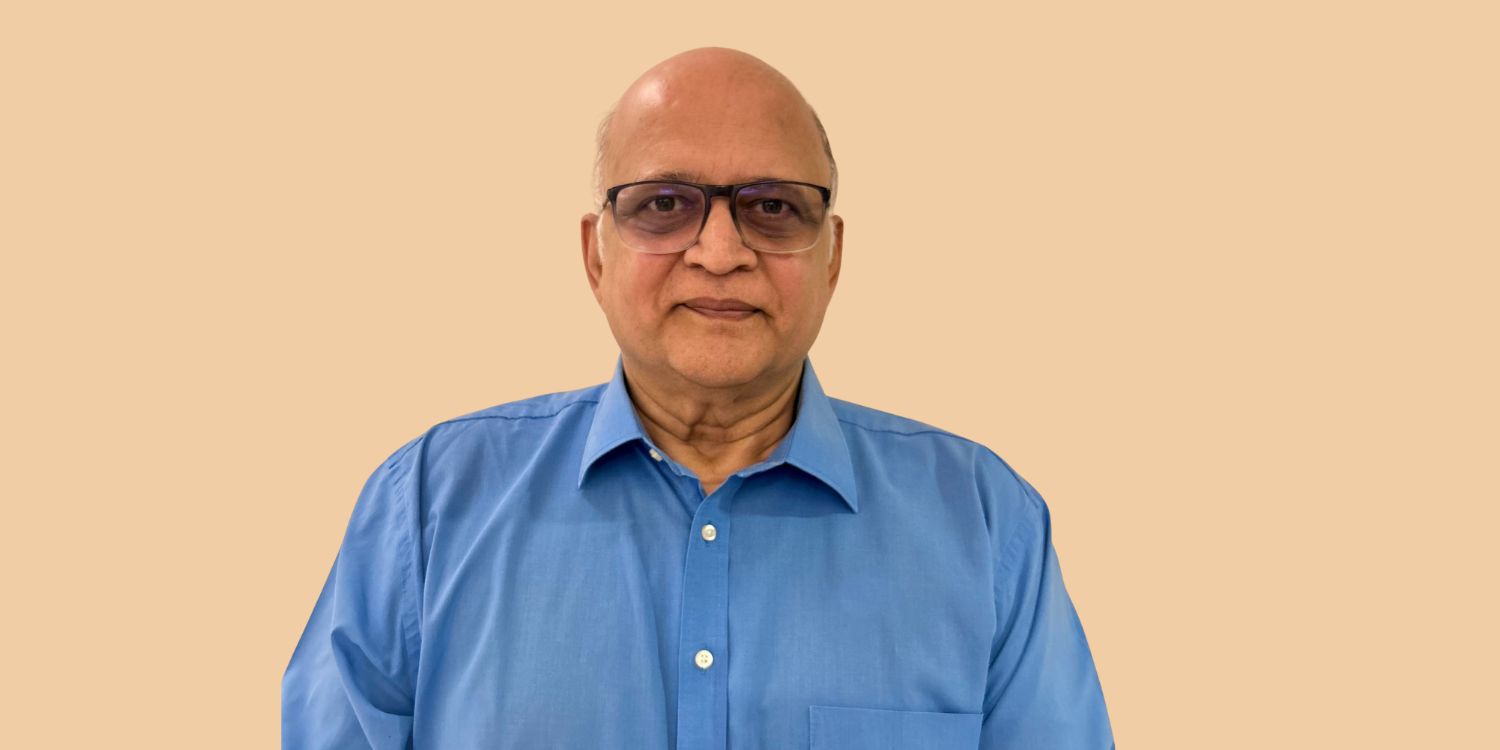
And this is precisely why treating cancer cannot be left to chance, or to good intentions alone. It demands institutions, and individuals who have spent entire lifetimes studying the disease. In a country where health insurance still falls short of covering the true cost of cancer care, and where the average household income lags far behind what a full course of treatment demands, the doctors and institutions who make quality cancer care accessible, not just available, are not a convenience. They are a necessity. This is the space Dr. Ramakant K. Deshpande has spent over four decades building.
Dr. Deshpande’s journey, from a young surgical trainee at Tata Memorial Hospital to the Executive Chairman of one of India’s most respected cancer care institutions, has proven, again and again, that expertise, when paired with purpose, can change how a nation fights its most feared disease.
A Start of Something Beautiful
Dr. Ramakant Deshpande graduated from Karnataka Medical College, Hubli, in 1976, with a clear ambition of becoming a surgeon, even before he understood what cancer surgery was all about. Being from outside Mumbai made securing a postgraduate seat a slower process, but he eventually found his way to Tata Memorial Hospital, then the only institution offering open registration.
He spent nearly four years there training in cancer surgery, and it was during this period that he saw firsthand how much relief could be offered to those suffering from the disease. It became clear to him that few fields offered this depth of impact. He had already worked across urology, general surgery, and orthopedics, but none matched the sheer magnitude of good that cancer treatment made possible. That realization led him to commit fully to oncology, becoming a cancer surgeon in 1982.
From Tata to a Vision of His Own
His first staff assignment took him to Kidwai Cancer Centre in 1985, where he spent close to three years. A position then opened up at Tata Memorial Hospital, and he joined its staff, practicing thoracic, pediatric, and general cancer surgery from 1986 to 2002. Over these years, he diagnosed, operated on, and followed thousands of patients, while also completing training in post-operative critical care. His learning extended well beyond Indian shores too, with stints at Memorial Sloan Kettering in New York, the Royal Marsden in England, and a focused training in endoscopic surgery in Singapore. Each of these experiences sharpened his ability to treat cancer, and the sheer volume of patients he encountered at Tata Memorial Hospital only accelerated his growth as a surgeon.
By 2002, after two decades at the institution, he decided to branch out. Alongside a group of twenty doctors, most of whom shared his roots at Tata, he co-founded the Asian Cancer Institute at Raheja Hospital. Twelve years later, the team moved to establish another iteration of the institute at Somaiya Medical College, where they operated from 2012 to 2019. In 2019, they took over Cumballa Hill Hospital in Mumbai, transformed it, and rebranded it as the Asian Cancer Institute at Cumballa Hill Hospital, the base from which he continues to work today.
A Race Against Time, Redefined
Few things capture how far cancer treatment has come than the change in survival odds Dr. Deshpande has witnessed over the years. When his career began, a stage 4 malignancy diagnosis meant a survival window of roughly six to ten months. Today, if a biopsy uncovers a targetable mutation or a genetic marker suited to immunotherapy, the same patients can sometimes live five to ten years. In a country like India, this shift carries a weight that goes beyond statistics. Unlike in the West, where cancer typically strikes past the age of 60, once people have largely stepped back from being the primary earners in their households, in India, it frequently strikes at 40, an age when men and women are still raising young children, building careers, and holding families together financially. For them, an extra five or ten years isn’t just added time, it’s continuity for an entire household.
This is precisely why he continues to advocate for public awareness, while encouraging people to consult a doctor the moment a warning sign appears, since an early diagnosis remains the single greatest determinant of a cure. Alongside public education and regular screening, he emphasizes preventive habits, staying physically active, avoiding obesity, keeping diabetes and hypertension in check, and steering clear of tobacco and alcohol. Even the government, he notes, has directed significant budgetary focus toward cancer prevention in recent years. But he believes the real work of public education must begin in schools, reinforced through television, newspapers, brochures, and community screening and awareness camps, since habits formed in childhood tend to last a lifetime.
As he puts it, sometimes the most powerful voice isn’t a doctor’s but a child’s – a young son or daughter turning to their father and asking, simply, “Papa, please don’t smoke, what will happen to me if you die?”
One City at a Time
Asked about his future plans for the Asian Cancer Institute and any new collaborations on the horizon, Dr. Deshpande points to Kashmir as one of his more meaningful recent efforts. The institute has partnered with Florence Hospital in Srinagar, run by a fellow surgeon well versed in oncology. Through this collaboration, cancer patients in the Kashmir valley are now receiving treatment closer to home, in a region that, as he puts it, has “hardly any dedicated facilities” of its own.
The expansion doesn’t stop there. The Asian Cancer Institute has also built collaborative centers in Pune, Indore, Bhubaneswar, and Kolkata. “We are continuously expanding our facilities and collaborating with many centers,” he says, a philosophy that has come to define the institute’s growth well beyond Mumbai.
Beyond the Operating Room
In the earlier years of his career, workdays would often stretch until nine at night, leaving little room to watch his own children grow, a responsibility his wife carried almost entirely on her own. Today, he’s found his way back to family, and what he couldn’t give his children in those years, he now gives generously to his grandchildren, spending unhurried time with them. Outside the hospital, his world is a fairly simple one – he reads more than he watches television, unwinds to music, catches the occasional show, and stays disciplined about his time at the gym.
It’s this same grounded honesty that shapes the advice he offers to those stepping into oncology, or medicine more broadly. “Medicine involves a lot of grunge work.” You don’t get an immediate response, and you shouldn’t expect to reap the fruits of your labor right away.” For him, the profession asks for patience above all, and something deeper than skill – empathy, which he’s careful to distinguish from sympathy.
His counsel to the next generation of doctors is, in the end, refreshingly simple – work hard, read widely, engage with people and mentors, take diligent notes, and approach the craft with sincerity, because as he sees it, medicine is as much an art as it is a science.