
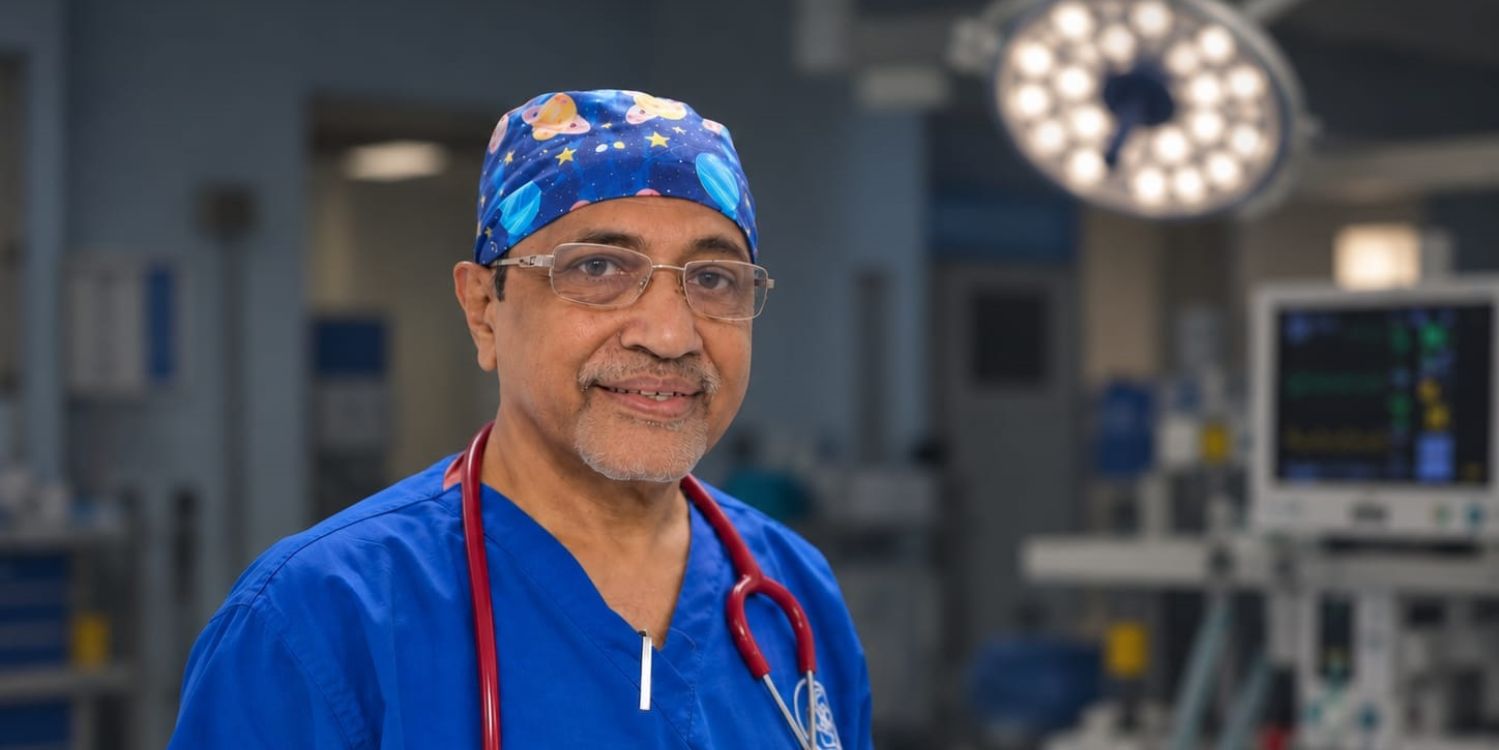
Paediatric anaesthesia is a speciality the public notice only when something goes wrong—quietly evident, rarely credited, and unforgiving of hesitation. Dr. S. Ramesh has spent over four decades in that unglamorous margin, and in a field where few are remembered by name, he has built a reputation that patients and peers speak of with great respect.
Ask him what sets him apart, and he doesn’t reach for a résumé line. He reaches for a swimming pool. He swims four to five hours a week with his wife, herself a paediatrician, not only for fitness but also because, as he puts it, “it’s a nice time to talk about the whole problems at home.” It’s a small, telling detail from a man who has spent almost 40 years in operating theatres, making split-second decisions for children too young to understand what is happening to them, and who insists, even now, that the job has never once felt like a burden. “Whatever work I do, I feel that when you go to the work you must think, I must go to the work. You should never think, why should I go to work today. Then your passion comes to you.”
From Scratch
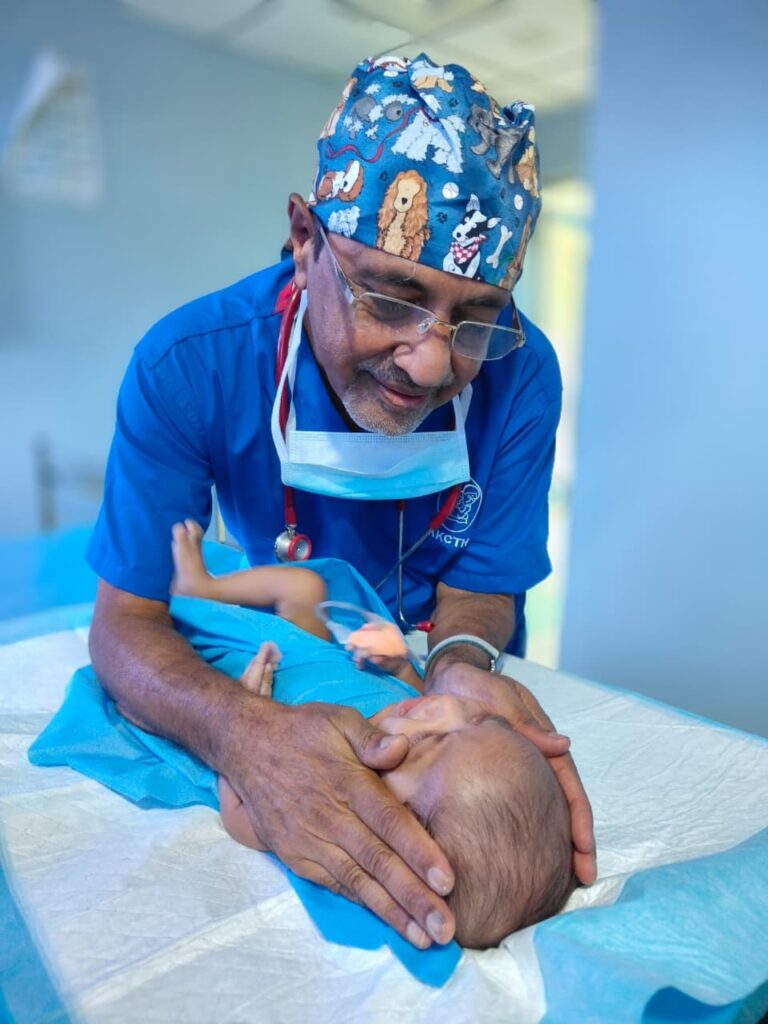
Dr. S. Ramesh’s journey began at Thanjavur Medical College in Tamil Nadu, followed by an MD in Anaesthesia from PGIMER, Chandigarh, which he completed in 1981. He had gone to JIPMER intending to become a general surgeon, but the anaesthesia department there, staffed by some of the best in the country at the time, pulled him in. When he told his chief that he wanted to specialise in anaesthesia rather than surgery, the warning he received stayed with him, and even after a decade or two behind the screen, watching surgeons operate, he sometimes wondered whether he should have become a surgeon instead. “I never looked back even after 40 years,” he says. “I still feel very happy and proud to be an Anaesthesiologist.”
He became the first registrar at Apollo Hospital, Chennai, in 1983, then spent two years training in paediatric anaesthesia before a stint as a consultant in Jeddah. When he returned to India, the 50-bed CHILDS Trust Hospital in Chennai had grown into a 200-bed institution as Kanchi Kamakoti CHILDS Trust Hospital(KKCTH). He joined as Chief of the Department of Paediatric Anaesthesiology in 1991 and has been there ever since, apart from a brief year when he served as Medical Director. “I thought I was just too early to be an administrator,” he says of stepping back into clinical work.
Choosing the Harder, Less Lucrative Path
In 1991, exclusive paediatric anaesthesia practice barely existed in India, and seniors warned him it wasn’t financially viable. He did it anyway. “The pleasures of being a paediatric anaesthesiologist are plenty, more than the money involved,” he says. He explains the economics plainly—a cardiac bypass for an adult can command lakhs because the family can justify the cost. A congenital heart defect in an infant from a middle-class family draws no such budget, so subsidised care becomes necessary. It is, by his own account, true of paediatric anaesthesia across the board, yet he calls the trade-off worth it, recalling chance encounters years later with grown patients he once anaesthetised on as infants.
Building a Speciality
With no mentor to train him in paediatric anaesthesia, Dr. S. Ramesh built his own education and training by travelling to centres such as Boston Children’s Hospital, Great Ormond Street,London, Toronto’s Hospital for Sick Children, Royal Children’s Melbourne and beyond, learning from leading paediatric anaesthesiologists and later hosting many of them at KKCTH in return. He represents India the Children of the World Anesthesia Foundation, at the invitation of its founder, Dr. Bruno Bissonnette, and helped found the country’s first organised paediatric intensive care unit at KKCTH in 1991, inaugurated by the then-Governor of Tamil Nadu.
He is credited with significant contribution to the Nation’s first All India Difficult Airway Guidelines for paediatrics (2016; revised in 2025). He has delivered roughly a dozen orations nationally and more than 400 lectures in India and abroad, and has published over 25 papers in indexed journals. He is the President of the Tamil Nadu-Pondicherry Chapter of the Indian Association of Pediatric Anesthesia, a recipient of the Best Teacher Award from the Tamil Nadu Dr. MGR Medical University, and is the founder and course director of KKCTH’s Fellowship in Pediatric Anaesthesia and trained more than 50 fellows in the country and abroad.
The Cases That Stay With Him
Among the thousands of children he has anaesthetised, one case involved a two-year-old who inhaled a watermelon seed into the windpipe, arriving completely blue with oxygen saturation in the 20s. Without waiting for imaging, his team rushed the child straight to the operating theatre and cleared the airway within minutes to make that child survive a dead scare. In another, a seven-year-old arrived with a large tumour in the chest compressing the heart; through careful stabilisation and a CT-guided biopsy under anaesthesia, the team diagnosed and began treating the child, who was speaking and walking again within ten days. “I could easily have said the child is not fit for anaesthesia,” he says. “Instead of that, I accepted to give anesthesia for betterment of the child.”
On AI, and What Won’t Change
Dr. S. Ramesh takes a measured view of artificial intelligence in his field. He distinguishes it from what he calls “augmented intelligence”, which he sees as useful for pre-operative risk scoring or drug-dosage guidance, but not as a substitute for the human judgement that anaesthesia demands in real time. “You cannot have an artificial system to administer anaesthesia for children’s surgery without human touch,” he says. “They cannot replace humans when it comes to technical procedures.”
Advice for the Next Generation
His message to young anaesthesiologists is blunt—an MD alone doesn’t make you ready to safely anaesthetize children. Citing the “10,000 hours” principle, he insists on a minimum of five years’ supervised practice, including two years after MD training, before working independently, particularly in paediatric cases, where there is no time to deliberate mid-crisis. “You should not be only confident, but you should become competent,” he says.
A Full Circle
He is blessed with two children, both of whom have chosen the field of medicine. His son has chosen community medicine, where he serves the public and teaches undergraduate and postgraduate medical students, while his daughter has chosen to become a paediatric anaesthesiologist.
Perhaps his proudest recent moment came watching his own daughter, also a paediatric anaesthesiologist at work in Boston. Given how rare paediatric anaesthesiologists are to begin with, he says that seeing his daughter follow the same path is one of the proudest moments of his life.