
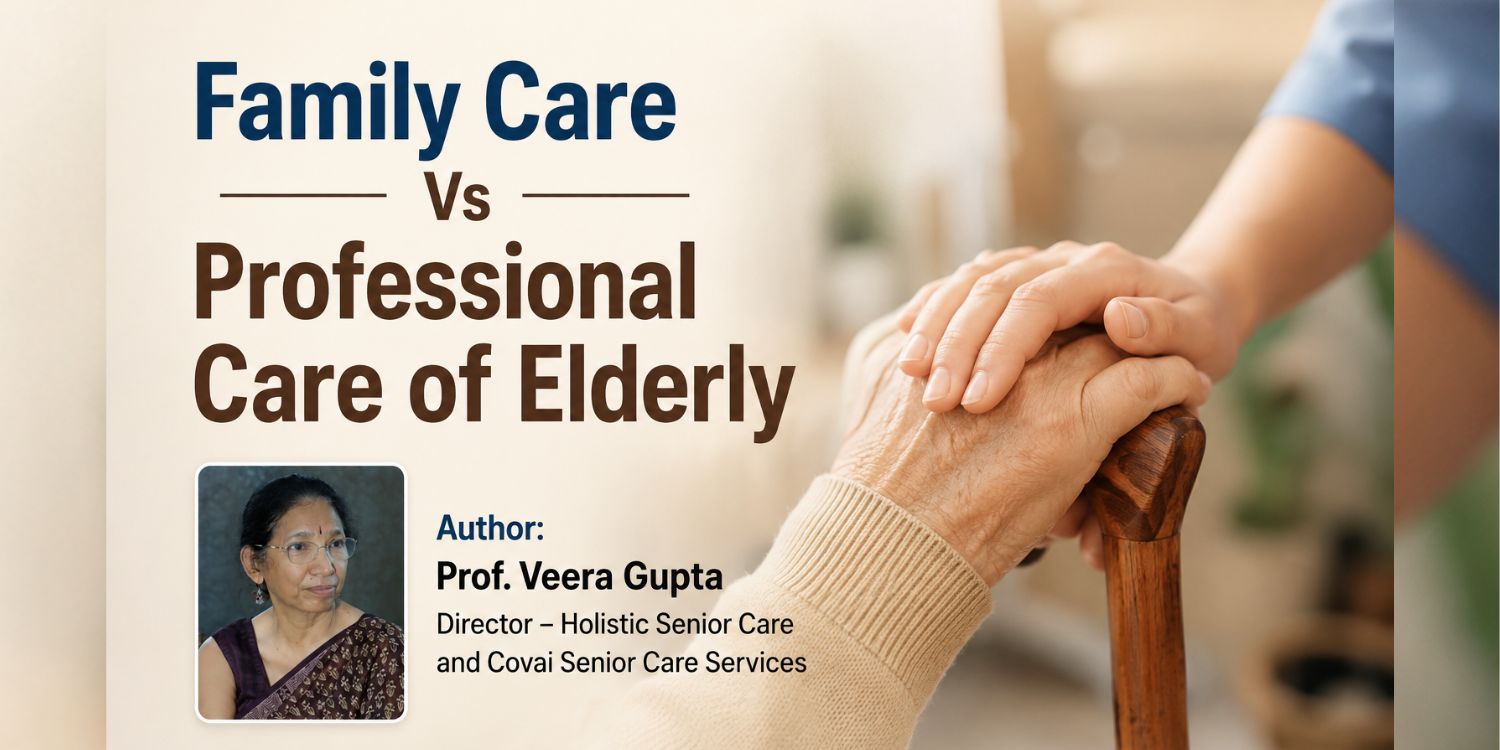
Aging is a natural process shared by all living beings. Yet, humans have interpreted and shaped it differently across historical periods. Each era’s approach to aging has been influenced by its ecosystem an interplay of societal values, available resources, and cultural norms.
In ancient times, life was divided into four quarters, each with distinct purposes, rhythms, and social boundaries. The last two stages Vanaprastha and Sanyas Ashram were free from competition or material pursuits. Longevity was not idolized; instead, the emphasis was on living well. Practices such as yoga and ayurvedic diets ensured strength and vitality even in old age. Death was not feared but embraced as a conscious act, with anecdotes of individuals undertaking maha samadhi by choice and will.
Over time, values shifted. The Grihastha Ashram focused on family, society, and material life extended across the lifespan. This prolonged engagement in worldly affairs reshaped social structures. Families began to honour elders, and inheritance systems encouraged younger generations to care for them. Aging became intertwined with social respect and familial responsibility.
The rise of financial institutions further transformed aging. Banking systems and pensions enabled individuals to accumulate wealth and sustain themselves independently in old age. While this independence preserved dignity, it weakened the traditional value of interdependence within families. Smaller family sizes and reduced reliance on kinship created new challenges, particularly in mental health and social cohesion.
Parallel to financial developments, technology began to replace human roles in caregiving. Tasks once performed by family members were delegated to machines or professionals. A mother’s touch to check for fever gave way to thermometers, later digital devices interpreted by trained caregivers. Machines became indispensable for monitoring vital signs, while professionals provided interpretation and treatment.
Consider the case of a ninety-year-old living alone. After slipping in the bathroom, the individual is rushed to the hospital through virtual networks of care. Advanced diagnostics reveal age-related complications, leading to conservative treatment rather than aggressive surgery. The patient is supported by catheters, feeding tubes, circulation devices, robotic exoskeletons, and constant monitoring. A team of specialists’ neurologists, physicians, therapists, nurses, and attendants collectively ensures survival and comfort.
This scenario reflects today’s norm: professionalized, systematic, and technology-driven elder care. Family caregiving, once central, has become nearly impossible in modern contexts. The future points toward for growth in regulation, specialization, and facilitation of professional care for elderly as norm and not as luxury in India.
Japan has established a highly organized system of professional elderly care that has become an accepted part of social life. In Japanese residential societies, senior care homes are located within easy reach, much like schools for children. Every elderly person is expected to join these homes, and families view this as a natural stage of life rather than a burden. The government plays a central role by sanctioning and monitoring these facilities, ensuring quality standards are maintained. Funding is provided through insurance schemes, which makes the system accessible and sustainable. Moreover, Japan has invested in academic institutions that offer specialized degree programs in elderly care, creating a trained workforce to meet the growing demand.
For India, adopting such a model requires a significant cultural shift. The term “old age home” often carries stigma, associated with neglect or abandonment. To make professional care acceptable, this perception must be replaced with the idea of senior living a dignified, community-oriented environment where elders thrive with companionship, healthcare, and structured support. Government involvement, insurance-based funding, and professional training programs will be essential. With these changes, India can transform elder care into a respected social institution, ensuring dignity and well-being for its aging population.
India is facing a critical demographic and healthcare challenge with declining birth rates and rising life expectancy; the elderly population is growing faster than the young. This creates situations where a single young couple may be responsible for supporting multiple grandparents and even great-grandparents. Sometimes as many as eight dependents. Clearly, the traditional family structure is insufficient to meet this scale of responsibility.
At the same time, the healthcare workforce is stretched thin. In medical institutions, one trained health professional may be responsible for 7–10 patients, which already strains quality of care. In contrast, home-based elder care often requires 7–10 professionals for a single elderly person, especially when advanced medical support and rehabilitation are involved. This inverted ratio is unsustainable both economically and socially.
The implication is clear: India must move toward a systematic, professionalized model of elder care, supported by government regulation, insurance, and academic training programs. Without expanding the pool of trained health and paramedical professionals, and without shifting societal attitudes toward dignified senior living, the country risks a severe mismatch between the needs of its aging population and the capacity of families and institutions to provide care.
About the Author:
Prof. Veera Gupta is a distinguished academician and researcher who has devoted over four decades to the development and dissemination of knowledge in pedagogy and educational administration. Her pioneering work has shaped teacher training, vocational education, and inclusive practices for students with disabilities. Throughout her career, she has collaborated with national and international institutions to design learning materials, prepare research reports, and present knowledge at global forums. A prolific author, she has published influential books and articles that continue to guide educators and policymakers.
Her areas of expertise span educational leadership, vocational education, and teacher training, with a strong focus on equity and inclusion. Today, Prof. Gupta extends her commitment to social welfare by running organizations dedicated to elderly care, ensuring dignity and support for senior citizens. Her journey reflects a lifelong dedication to knowledge creation, capacity building, and service to society.
Author :
Prof. Veera Gupta
Director – Holistic Senior Care and Covai Senior Care Services