
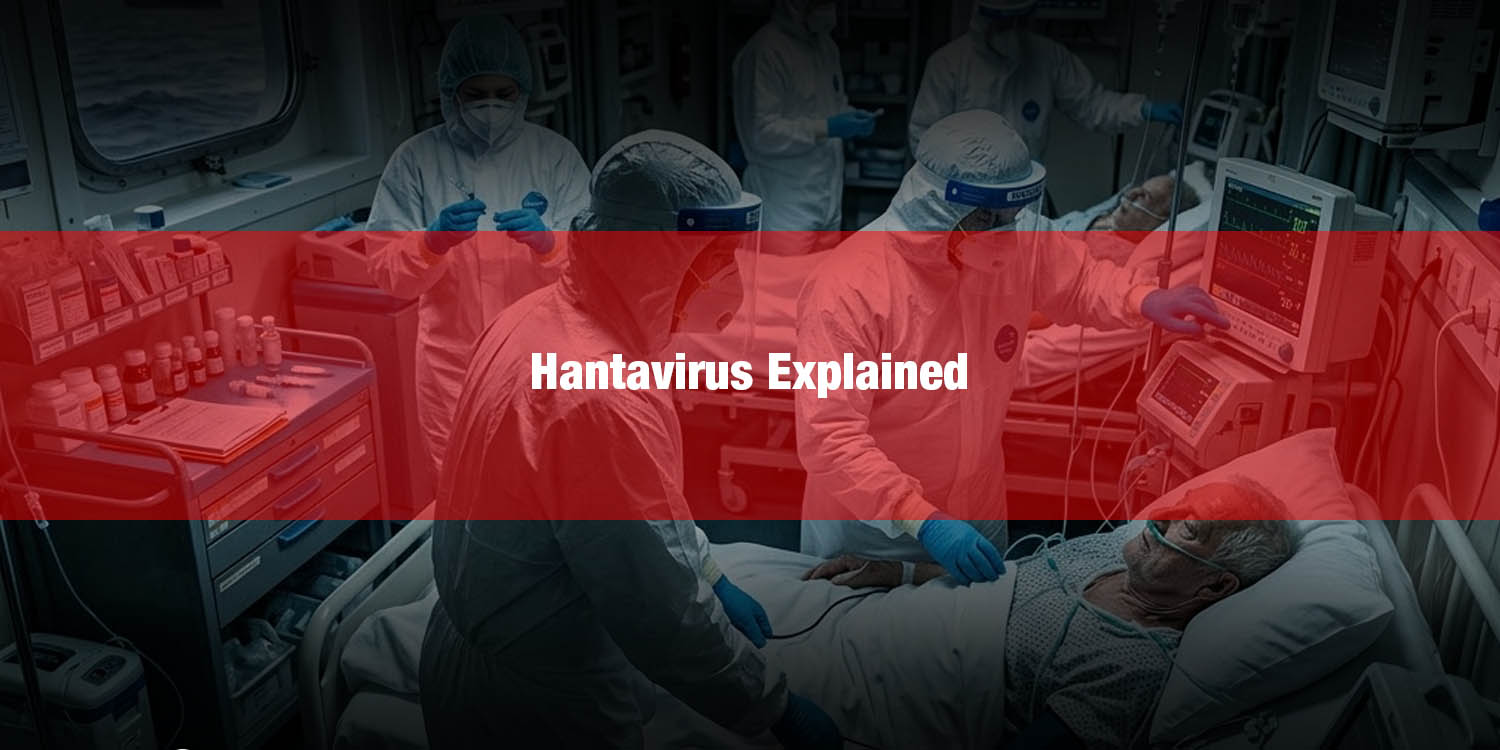
A suspected outbreak of hantavirus aboard the expedition cruise ship MV Hondius has drawn international attention after at least three passengers died and several others fell ill during the voyage. Health authorities, including the World Health Organization (WHO), are currently investigating the outbreak, with one confirmed case and multiple suspected infections reported.
The ship, carrying passengers from multiple countries, remains under strict monitoring, with isolation protocols in place and medical evacuations underway. While officials have stated that the broader public risk remains low, the incident has renewed focus on the rare but potentially deadly virus.
What is Hantavirus?
Hantavirus is a group of viruses primarily spread through contact with infected rodents, particularly via their urine, droppings, or saliva. Humans typically become infected by inhaling contaminated particles or through direct contact with these materials.
The virus is not easily transmitted between humans, although rare exceptions exist depending on the strain. Most infections are linked to environmental exposure rather than person-to-person spread.
Symptoms and Severity
Hantavirus infections often begin with flu-like symptoms such as fever, fatigue, and muscle aches. However, the disease can progress rapidly into severe respiratory distress or kidney complications, depending on the strain.
In its most severe form, hantavirus pulmonary syndrome (HPS), the illness can lead to lung failure and has a mortality rate of up to 40%, making early diagnosis and treatment critical.
Why This Outbreak Matters
The cruise ship outbreak is unusual due to the confined setting and the number of suspected cases emerging within a short period. Experts believe the source may be linked to rodent exposure either onboard or during earlier stops, though investigations are ongoing.
Despite its severity, hantavirus remains rare globally. Health authorities emphasize that the current situation does not indicate widespread transmission risk but underscores the importance of hygiene, early detection, and monitoring in controlled environments such as ships.
As investigations continue, the incident serves as a reminder of how zoonotic diseases, those transmitted from animals to humans, can emerge unexpectedly and pose serious health risks, even in highly regulated settings.