
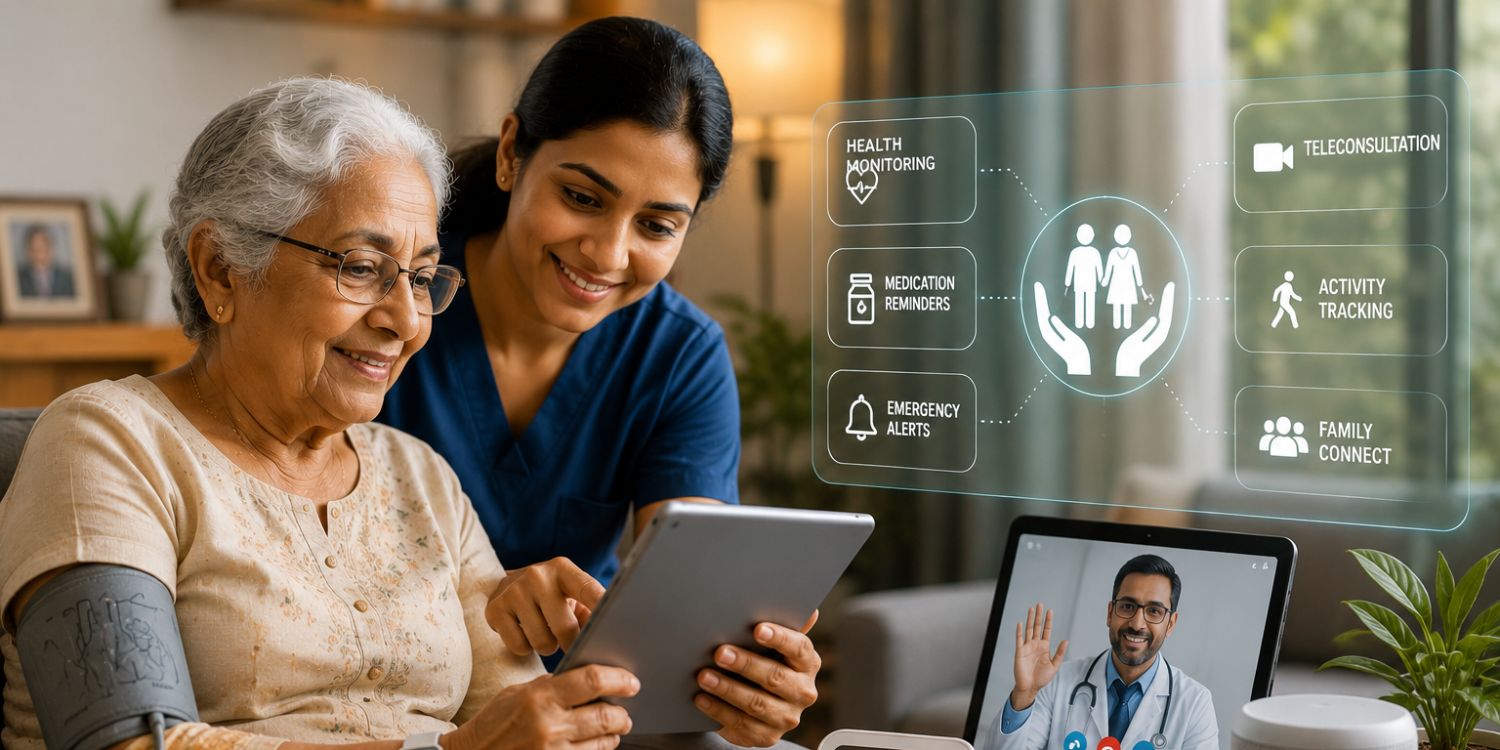
A decade ago, technology and old age rarely appeared in the same sentence in India. Smartphones were for the young, apps were for the tech-savvy, and elderly parents were the ones being taught, slowly and patiently, how to make a video call. That picture is changing faster than most people realize, not because seniors have suddenly become digital natives, but because the industry built around them has.
Today, a growing part of India’s elder care sector runs quietly in the background, through sensors, apps, and remote monitoring systems that most elderly users barely have to interact with directly. The technology is not replacing human care. It is filling the gaps that distance and scale have created.
Solving the Distance Problem
The single biggest driver of tech-enabled elder care in India is geography. Adult children living in another city or another country cannot be physically present, but they can be digitally present, and that has created real demand for tools that bridge the gap.
Remote health monitoring devices now track vitals like blood pressure, heart rate, and glucose levels, sending real-time updates to family members and caregivers. Emergency alert systems, often built into wearables or home devices, can detect falls or unusual inactivity and immediately notify a designated contact or care team. For a son in Bengaluru worried about a mother living alone in a smaller town, this kind of quiet, constant monitoring offers something that was simply unavailable a few years ago: peace of mind that does not require a daily phone call to manufacture.
Telemedicine as the New House Call
For decades, the family doctor who made house calls was the backbone of elder care in India. That figure has largely disappeared from urban life, but telemedicine is reviving something similar in digital form. Video consultations allow elderly patients to see specialists without the physical strain of travel, which matters enormously for those managing mobility issues or chronic conditions.
This is particularly significant for elderly Indians in smaller towns and rural areas, where specialist care is often hours away. A geriatric consultation that once required an overnight trip to a city hospital can now happen from a home, with a caregiver or family member assisting on the other end. The technology does not eliminate the access gap between rural and urban India, but it narrows it in meaningful ways.
Medicine Delivery and Daily Support
Beyond emergencies and consultations, technology is also quietly handling the everyday logistics of elder care. Medicine delivery platforms now allow families to set up recurring orders so an elderly parent never runs out of essential prescriptions. Some services go further, sending reminders directly to the senior or coordinating with a local caregiver to ensure medications are actually taken, not just delivered.
This might seem like a small convenience, but medication adherence is one of the most persistent challenges in managing chronic illness among the elderly. A missed dose caught by a smart reminder system, or a caregiver alerted through an app, can prevent a health crisis before it starts.
The Rise of AI in Predictive Care
The next frontier in this space is prediction rather than reaction. AI-driven health monitoring is beginning to identify patterns that suggest a decline in health before it becomes an emergency, changes in sleep, mobility, or vital signs that might indicate an oncoming issue. Combined with smart home technology designed for elder safety, such as sensors that detect unusual patterns of movement or inactivity, this represents a shift from responding to problems to anticipating them.
This is still an emerging area in India, and adoption remains concentrated among urban, tech-comfortable families who can afford these services. But the underlying direction is clear: care that used to depend entirely on someone physically noticing a problem is increasingly being supported by systems that notice on their own.
Technology Cannot Replace Presence, But It Can Extend It
The honest limitation of all this innovation is that no app or sensor can replace a hand to hold or a familiar face in the room. What technology has done, and done well, is extend the reach of care for families who cannot always be physically present, and give overstretched caregivers tools to work more effectively rather than simply harder.
For India’s elder care providers, the real opportunity ahead is not choosing between human care and technology, but designing systems where each strengthens the other, technology handling the constant vigilance that humans cannot sustain alone, freeing caregivers to focus on the parts of care that only a person can truly provide.