
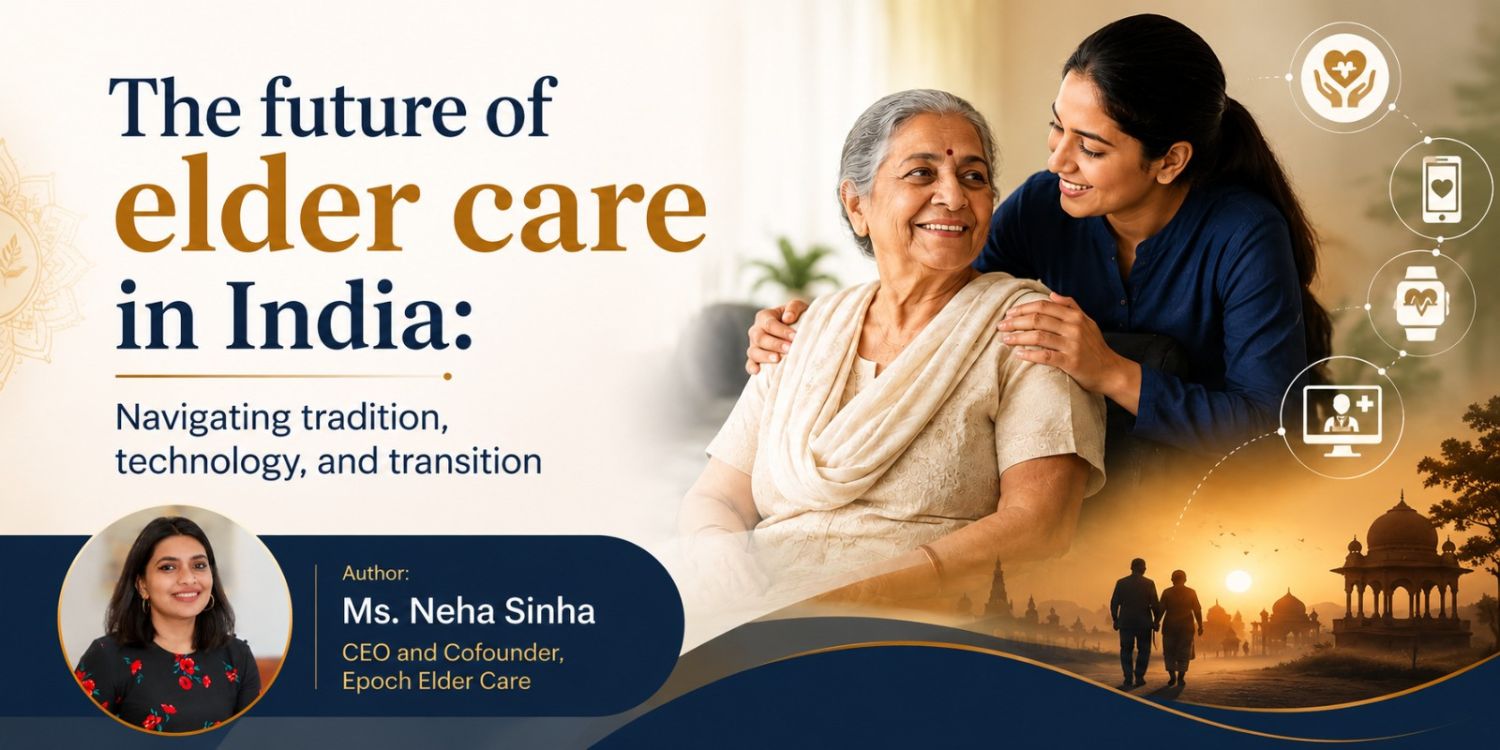
There’s a particular kind of ache that comes with your elderly loved ones aging. It’s not just the slower steps, it’s the quiet realization that the people who once took care of you now need you to take care of them. For most Indian families, this moment doesn’t come with a manual, but with strong emotions; fear, confusion and overwhelm.
It’s a moment that many Indians are facing today as India ages faster than most people realise. The country’s elderly population is projected to more than double to roughly 230 million by 2036, meaning nearly one in seven Indians will be 60 or older within the next decade. By 2050, that number is expected to cross 300 million, with people aged 80 and above growing at one of the fastest rates in the world. This isn’t a distant demographic footnote, it’s a shift already reshaping how Indian families live, plan, and care for one another.
Elder care in the Indian context: The emotional weight we carry
In India, caring for elderly loved ones has always been woven into our idea of family, which is partly why seeking outside help has long carried an unspoken stigma, as in this context, it is perceived poorly on one’s love for them. Oftentimes, a single person in the family carries this care for far longer than most families anticipate – leading to physical exhaustion, lost income, and emotional isolation that frequently goes unspoken.
Research from the Longitudinal Ageing Study of India shows nearly three in four elderly Indians live with at least one chronic illness, and one in five face mental health concerns like depression, conditions that can overwhelm a family member managing them alone. Increasingly, professional care is seen not as a replacement for family love, but as a structured way of sustaining it.
Technology: Making care easier and more connected
Technology is quietly becoming one of the most practical tools in facilitating independence at home as well as assisted living/professional services. fall-detection sensors, medication reminder systems, video-enabled check-ins, and smart home sensors that monitor movement patterns are helping families stay connected to elders, even across cities or countries. Some cognitive stimulation apps and voice-activated assistants are also being used to support memory and daily routines in ways that feel less clinical and more natural.
For families living far from home, this kind of monitoring offers something concrete: earlier detection of problems leading to fewer emergencies. It doesn’t replace human care, but it does close some of the gaps that distance and complex conditions create.
Why is professional care becoming increasingly important?
When chosen thoughtfully, professional care can meaningfully improve an elder’s daily activities and overall quality of life, bringing clinical knowledge, consistency, and structured routines that are difficult to maintain when families are already juggling careers, children, and their own health. Several shifts are making the “do it all yourself” model harder to sustain:
- Nuclear families and more women joining workforce mean the responsibility of elder care increasingly falls on one or two people, rather than being shared across a larger household.
- Demanding careers leave little room for the consistency and long-term planning that caregiving requires.
- Complex, long-term health conditions are increasingly common among elders today, requiring specialized knowledge that cannot be provided without training.
- Caregiving burnout sets in when support is inadequate, stretching caregivers – the cost is frequently invisible: physical exhaustion and emotional isolation.
Professional care helps ease this load, allowing families to step back from logistics and crisis management, and simply be present for connection again.
How India’s elder care landscape is evolving and what does professional elder care look like in practice?
India’s elder care ecosystem is maturing in response to these pressures, with home healthcare services,retirement communities, assisted living homes, geriatric specialists, and technology-enabled care coordination becoming more visible in cities and, gradually, beyond them, reflecting a broader shift from reactive, crisis-driven care to care that’s planned and built around an elder’s actual needs. At its best, this looks less clinical and more personal, centred on the individual rather than a diagnosis, and typically includes:
- Emergency management and response, fall and incident prevention and management
- preventive healthcare, focus towards active ageing
- Person-centered care: treating each elder as an individual with a distinct history and needs, and thoughtfully designing their care plans around their conditions, routines, and preferences
- Opportunities for Meaningful engagement and living with a purpose: conversation and activity that support emotional and cognitive wellbeing, not just physical health
- Regular health monitoring: to catch and manage issues before they escalate
- Transparent communication with families: keeping loved ones informed and involved, not sidelined
- Everyday life made simpler through concierge services and travel add ons
This is the shift happening across India’s elder care landscape, care that doesn’t ask families to choose between professional expertise and personal warmth, but brings the two together, so elders are supported with dignity, and families get to simply show up as family again.
Conclusion
The future of elder care in India isn’t a choice between tradition and progress, it’s a combination of the two, shaped by necessity. The numbers make that clear: a rapidly ageing population, rising rates of chronic illness, and family structures that are stretched thinner than they used to be. Technology will keep making care smarter and more connected. Professional care will keep becoming more personal, not less. And families will keep loving their elders, just with more informed support, and fewer unanswered questions.
Author:
Ms. Neha Sinha
CEO and Cofounder, Epoch Elder Care