
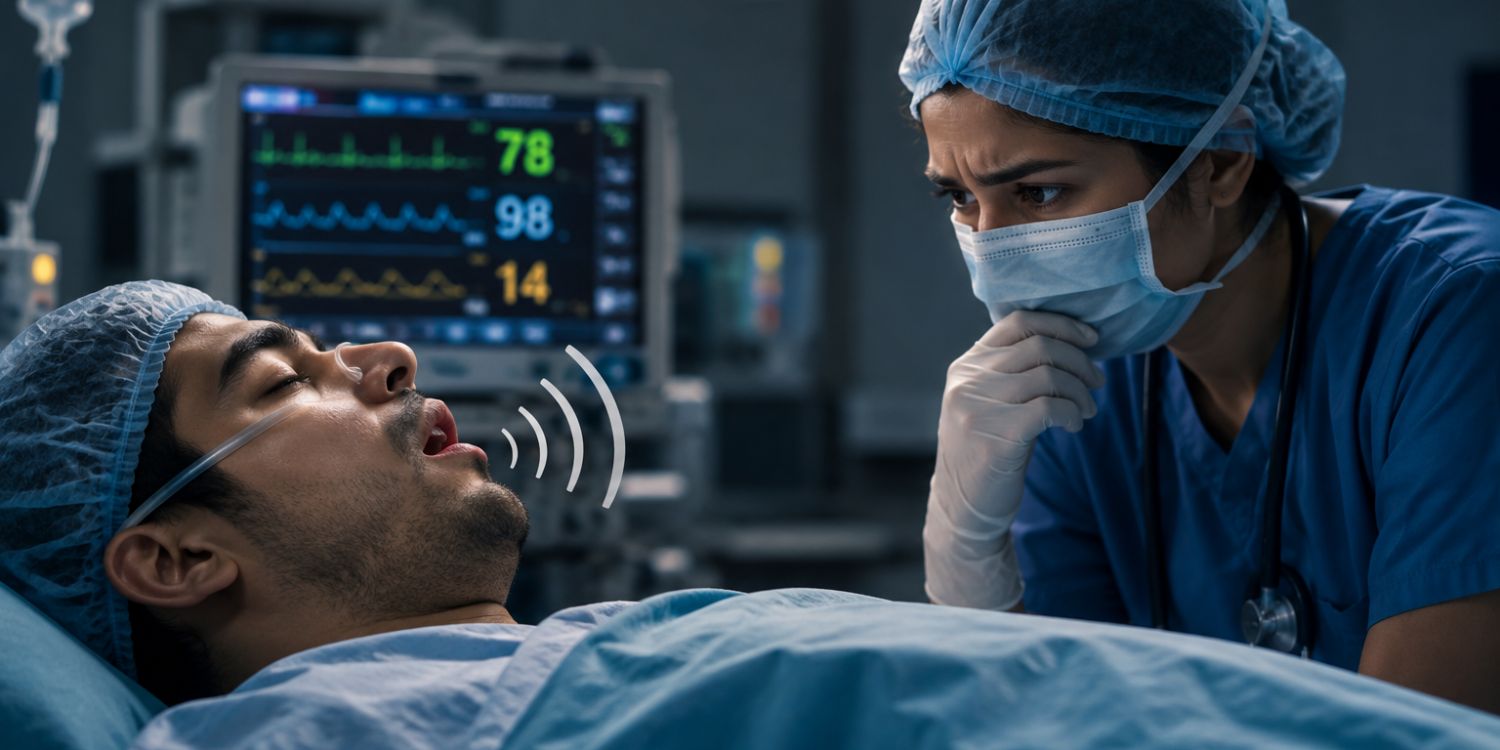
Loud snoring is often treated as a joke at home. For an anaesthesiologist, it can be an important warning. It is one of the most common signs of obstructive sleep apnoea (OSA), a condition in which the throat repeatedly narrows or closes during sleep, briefly cutting off breathing.
More common than most realise
A meta-analysis by researchers at AIIMS New Delhi, published in Sleep Medicine Reviews, estimated that about 11% of Indian adults have OSA. That amounts to roughly 10.4 crore people of working age, of whom about 4.7 crore have moderate to severe disease. Men are affected more often than women, and the risk rises with age, weight, high blood pressure and alcohol use.
Most of these people have never been diagnosed. And the gap often continues into the hospital. In a widely cited study in the British Journal of Anaesthesia, among surgical patients found on testing to have moderate to severe OSA, 92% had not been identified by their surgeons and 60% by their anaesthetists before the operation.
Why it matters during surgery
Anaesthetic drugs, sedatives and strong painkillers relax the muscles of the throat and dull the brain’s drive to breathe. In a person with OSA, whose airway already tends to collapse during sleep, this can make breathing harder to manage at the start of anaesthesia and lead to longer or more frequent pauses in breathing afterwards. The first few nights after surgery, when patients are drowsy and receiving pain relief, need particular care.
Patients with OSA may also have higher blood pressure and heart strain, which the anaesthesiologist needs to account for.
The simple screening test
Anaesthesiologists often use a short questionnaire called STOP-BANG. It asks about loud Snoring, daytime Tiredness, Observed pauses in breathing during sleep and high blood Pressure, along with BMI, Age, Neck size and Gender. Several “yes” answers point to a higher risk and may prompt a sleep study before planned surgery.
What patients should do
•Tell your anaesthesiologist if you snore loudly, wake up unrefreshed, feel sleepy during the day, or if your family has noticed you stop breathing at night.
•If you already use a CPAP machine, bring it to the hospital and use it after surgery.
•Ask about options. Depending on the operation, a regional anaesthetic such as a nerve block or spinal anaesthesia, and pain relief that relies less on strong opioids, may be suitable.
With this information, the anaesthesiologist can plan the airway, choose drugs carefully and arrange closer monitoring after surgery. Identifying OSA before an operation also brings a lasting benefit. Many patients go on to treatment that improves their sleep, energy and heart health long after they have recovered.