
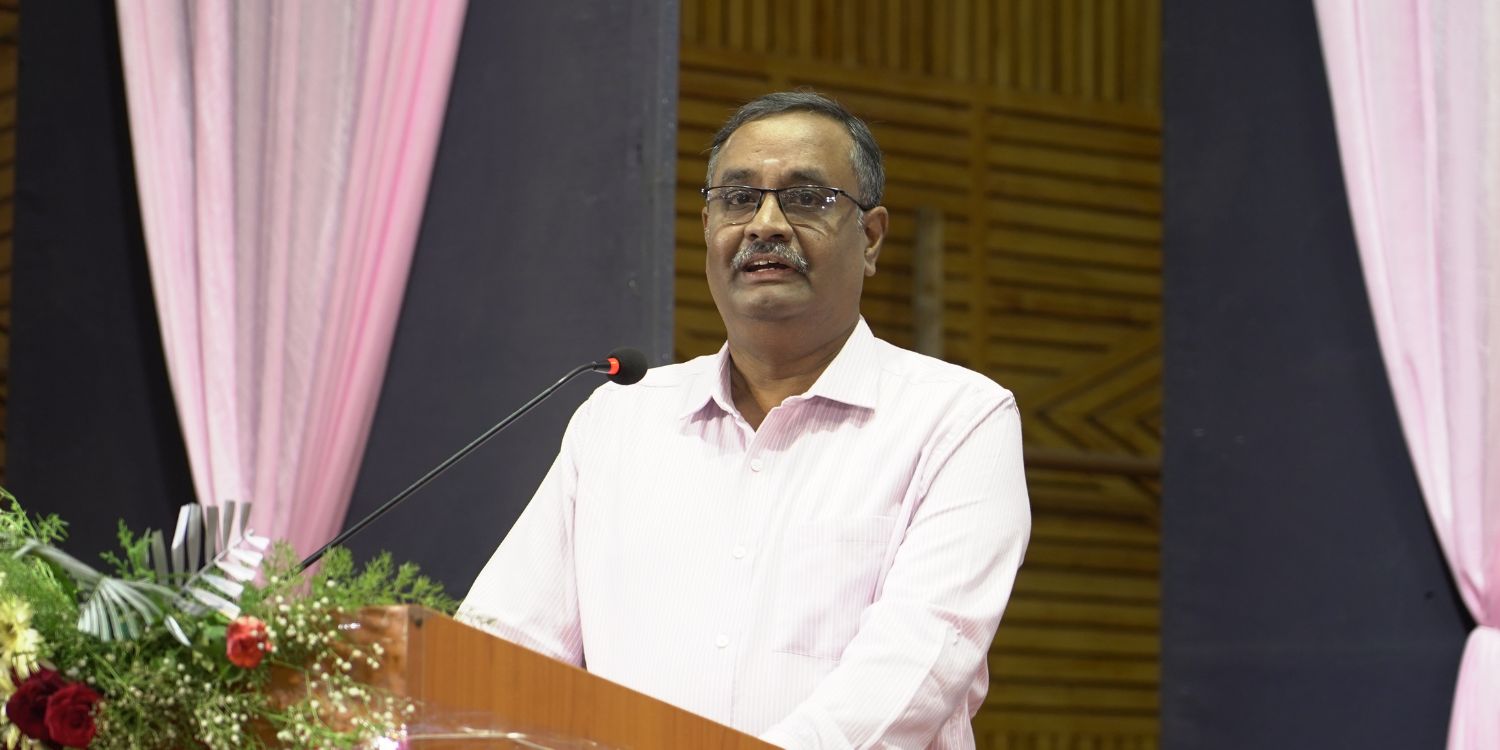
Following a profound passion in a field and choosing to develop it into a long-term career path often leads to individuals who excel not only academically, but who also invest far beyond surface-level interest in their professional lives.
Dr. V. Kannan found his calling in orthopaedics during his final year of MBBS. Since then, he has worked across varied clinical environments, including structured institutional hierarchies as well as settings where he functioned as the sole orthopaedic surgeon. Across both, he has remained consistent in his approach to patient care, while also contributing academically by guiding and encouraging aspirants towards professional growth.
Pursuit of Orthopaedics
Despite having a family tree with engineers, Dr. V. Kannan wanted to pursue medicine as his professional interest. As a student, he maintained a consistent academic focus, eventually securing admission to Madurai Medical College to finish MBBS. Orthopaedics emerged as a defined interest some time in his final year.
After graduation, he joined the Indian Railway Health Service, posted to Central Railway. His passion towards orthopaedics led the organisation to sanction three years of extraordinary leave to pursue postgraduate training. He completed his MS in Orthopaedics from a Government Medical College in Punjab and his period concluded with a Gold Medal and recognition as the Best Outgoing Student of his batch.
Through Varied Terrains
During Dr. Kannan’s medical training in Punjab, he was exposed to many high-volume trauma and reconstructive procedures. However, the Palakkad Divisional Railway Hospital experience brought in another aspect altogether. With limited infrastructure and resources, the focus shifted toward clinical judgement, prioritisation, and continuity of care without reliance on advanced technology.
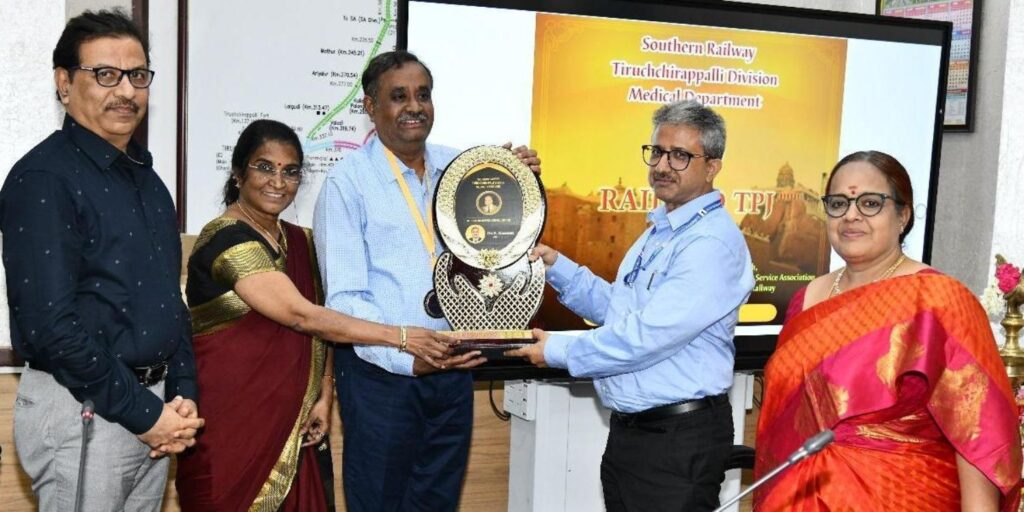
When he later moved to Southern Railway Headquarters Hospital, Perambur, it gave him accessibility to a more developed institutional setup. Here, Dr. Kannan engaged with complex trauma cases and joint replacement surgeries, within multidisciplinary teams set up. He was also involved in the development of a modular operation theatre complex comprising eleven modern operating rooms.
Apart from all this experience, Dr. Kannan spent a significant portion of his career at the Integral Coach Factory Hospital in Chennai, where he served as the sole orthopaedic surgeon for fifteen years. In this role, he managed outpatient services, inpatient care, emergency trauma, and elective surgical procedures independently.
Gathering all these professional and personal experiences Dr. Kannan built confidence and moved into leadership positions including Chief Medical Superintendent, Chief Staff Surgeon, Medical Director, and eventually Principal Chief Medical Director at East Coast Railway.
Shaping Surgical Thought
Parallel to his clinical and administrative work, Dr. Kannan has maintained a sustained involvement in medical education. For over fifteen years, he has served as a faculty member and examiner for the National Board of Examinations, focusing on both theoretical and practical assessments. In postgraduate training, he focused on structured teaching of surgical techniques alongside the development of clinical reasoning. Under his mentorship, trainees from Southern Railway Headquarters Hospital secured Gold Medals in DNB Orthopaedics in 2015 and 2017. His vision is directed towards producing surgeons capable of independent judgement rather than procedural repetition.
Moments that Matter
Dr. Kannan recalled one specific case which really had an impact, he remarked, “For a surgeon, the greatest achievement is not the number of surgeries performed but the quality of life restored. One particular patient remains unforgettable. She underwent bilateral total knee replacement at the age of 64. Several months later, she unexpectedly visited my residence carrying Prasad from the Char Dham Yatra. I casually asked her how she managed such a demanding pilgrimage after knee replacement surgery. She smiled and replied that she had walked through the hills comfortably because of her new knees. That moment perfectly captured the purpose of orthopaedic surgery. We are not merely replacing joints; we are restoring confidence, independence, and the ability to enjoy life.
There can be no greater reward than seeing a patient return to normal life.
Rather than identifying a single operation or award, I consider the consistent restoration of mobility and quality of life for countless patients to be my greatest achievement. Equally rewarding has been the opportunity to build strong orthopaedic teams, mentor young surgeons, and contribute to academic excellence.”
Measured Integration
In orthopaedics, Dr. Kannan views technology through the role of navigation systems and robotic-assisted surgery in improving precision, particularly in implant positioning and alignment. These technologies contribute to consistency and may influence long-term outcomes. However, he maintains that surgical judgement remains the primary determinant of success, with technology functioning as an adjunct rather than a replacement.
Looking ahead, he identifies artificial intelligence as a developing component in areas such as preoperative planning, implant selection, predictive analytics, and postoperative monitoring. While these tools may support data-driven decision-making, he notes that aspects such as patient communication, ethical judgement, and clinical intuition remain outside algorithmic scope.