
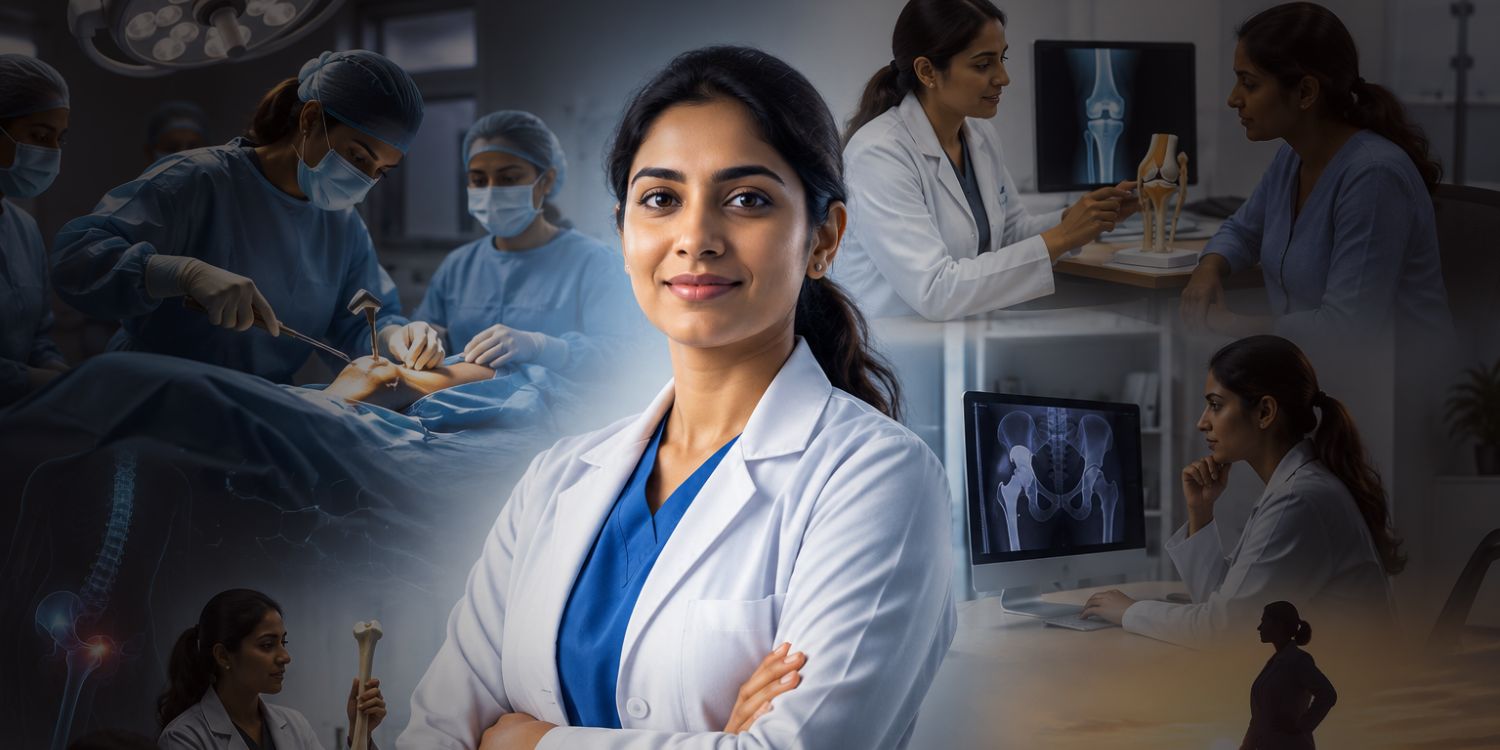
Walk into most orthopaedic operating theatres in India, and the odds are you’ll find a room full of men. Of all surgical specialties, orthopaedics remains among the most male-dominated, not just in India, but globally. Yet the women who have pushed into this field are quietly rewriting what the specialty looks like, one surgery at a time.
Why so few women?
The reasons are structural, not talent-based. Orthopaedic training is physically demanding, long hours holding retractors, hammering implants, standing through multi-hour joint replacements. For decades, this fed a lazy assumption that the field simply “wasn’t for women.” Add to that the scarcity of visible female mentors, the difficulty of balancing rigorous residency years with starting a family, and a culture in many training hospitals that still treats women in ortho as an exception rather than the norm, and it’s easy to see why the pipeline has stayed thin.
But the physical-strength argument doesn’t hold up under scrutiny anymore. Modern orthopaedic surgery relies heavily on technique, precision instrumentation, and increasingly, robotic assistance, tools that level the playing field regardless of who’s holding them.
The women changing the picture
Across India’s metros, a growing number of women orthopaedic surgeons are building serious reputations in joint replacement, trauma, paediatric orthopaedics, and sports medicine, traditionally the most male-coded sub-specialties. Many are also taking on academic and leadership roles, training the next generation and actively mentoring young women residents who might otherwise not see a path forward in the field.
Their presence matters beyond representation. Studies globally have shown that greater gender diversity in surgical teams correlates with better communication, more collaborative decision-making, and, some research suggests, improved patient outcomes. For patients, particularly women navigating conditions like osteoporosis, pelvic fractures, or postpartum joint issues, having a female surgeon in the room can also mean a different, more comfortable kind of conversation.
What needs to change
Real progress means more than a few standout names. It requires:
- Senior women surgeons actively sponsoring younger trainees
- Flexible residency structures that don’t force a choice between family and specialty
- Institutional accountability, hospitals and medical colleges tracking and reporting gender representation in ortho residencies
- Magazines and platforms like this one making a deliberate effort to feature women surgeons, not as a token category, but as clinicians whose surgical volumes and outcomes speak for themselves
A field worth watching
India’s orthopaedic community is entering a technology-driven era, robotics, AI-assisted planning, 3D-printed implants. This shift is also a quiet opportunity: as the field redefines what surgical skill looks like, it has a chance to redefine who gets to practice it too. The women already in the operating theatre aren’t waiting for permission. They’re operating.