
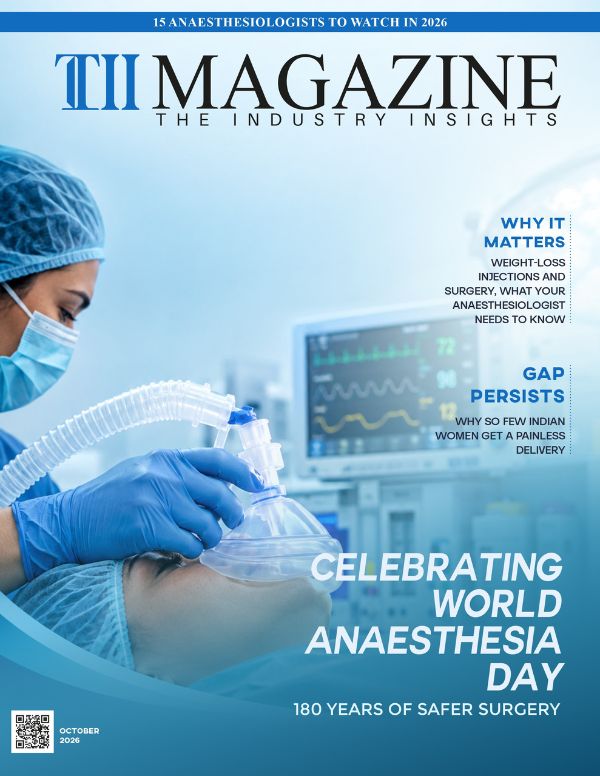
Every operation has two doctors at its centre. Patients remember the surgeon. The anaesthesiologist is the one who makes the operation possible, watching every heartbeat and every breath from the first injection until the patient wakes.
This issue arrives in the week of World Anaesthesia Day, 16 October, which marks the first public demonstration of ether anaesthesia in Boston in 1846. In the 180 years since, the specialty has moved well beyond the operating theatre. Anaesthesiologists now run intensive care units, relieve the pain of childbirth, treat chronic pain, sedate patients for scans and endoscopies, and step in when a patient’s airway fails in an emergency.
15 Anaesthesiologists to Watch 2026 celebrates doctors who do this work with skill and steady judgement, in teaching hospitals, corporate hospitals and specialist centres across the country.
Alongside their profiles, our editorial asks one of the most pressing questions in Indian healthcare, whether the country is training enough anaesthesiologists to keep pace with the surgery it needs. Four articles take up subjects patients are asking about right now, from weight-loss injections before surgery and painless childbirth to the snore that worries anaesthesiologists and the myths that still make people afraid of “going under”. We close with five facts from the specialty’s remarkable history.
We hope this issue gives readers a clearer view of the doctor at the head of the operating table.
How We Selected the List
- Clinical experience and volume. Years in practice, anaesthetics administered, and high-risk and complex surgical cases managed
- Breadth of expertise. Cardiac, neuro, paediatric, obstetric and regional anaesthesia, critical care and pain medicine
- Patient safety and outcomes. Safety record, perioperative outcomes, smooth recovery and patient feedback
- Academic contribution. Research, publications, teaching and mentoring young anaesthesiologists
- Peer recognition. Professional standing, society roles, awards and peer endorsements
- Innovation. Adoption of new techniques, technology, monitoring and safety protocols, such as ultrasound-guided blocks and enhanced recovery pathways
- Access and community impact. Labour analgesia and pain services, training of paramedical staff, awareness work and reach beyond metros
- Ethical practice. Clear pre-anaesthetic counselling and transparent, patient-centred communication
Anaesthesiologist | Organisation / Location |
Dr. Anantha Ramaiah T | Bangalore Medical College and Research Institute, Bengaluru |
District Hospital, Bagalkote | |
Ganga Hospital, Coimbatore | |
Crest Hospital, Vijayawada | |
Kanva Sri Sai Hospital & Sun Hospitals, Bengaluru | |
Yenepoya Medical College Hospital, Mangaluru | |
Fortis Hospitals, Bengaluru | |
Narayana Institute of Cardiac Sciences, Bengaluru | |
Indian Society of Anaesthesiologists, Rohtak | |
All India Institute of Medical Sciences, New Delhi | |
Kanchi Kamakoti CHILDS Trust Hospital, Chennai | |
Daya General Hospital & Speciality Surgical Centre, Thrissur | |
Tata Memorial Hospital, Mumbai | |
HealthWorld Hospital, Durgapur | |
Sree Chitra Tirunal Institute for Medical Sciences and Technology |
Editorial
Is India Training Enough Anaesthesiologists?
A caesarean section at midnight, an emergency operation after a road accident, a hip replacement for an 80-year-old. Each of...
In-House

Five Anaesthesia Myths, Answered
For many patients, the anaesthetic worries them more than the operation itself. Some of that fear comes from films, some...
The Snore That Worries Your Anaesthesiologist
Loud snoring is often treated as a joke at home. For an anaesthesiologist, it can be an important warning. It...
Why So Few Indian Women Get a Painless Delivery
Labour pain ranks among the most intense pain a person can experience. Yet for most women in India, it is...
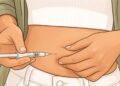
Weight-Loss Injections and Surgery, What Your Anaesthesiologist Needs to Know
In March 2026, the patent on semaglutide expired in India, and within days dozens of companies launched generic versions. Monthly...